The Skyway neighborhood is part of an unincorporated area of King County, located between Seattle and Renton. For generations, the community has been neglected, falling outside clear jurisdictional responsibility. Due to underinvestment, the community has relied on mutual support; engaged in advocacy; and championed grassroots initiatives and programs.
Schemata Workshop first partnered with the Skyway community in 2013 to envision a much-needed community center. Through three workshops, residents expressed a desire to share knowledge, support one another, and create spaces for healing from past trauma. A key priority was a casual gathering place—somewhere to get coffee and connect with neighbors.
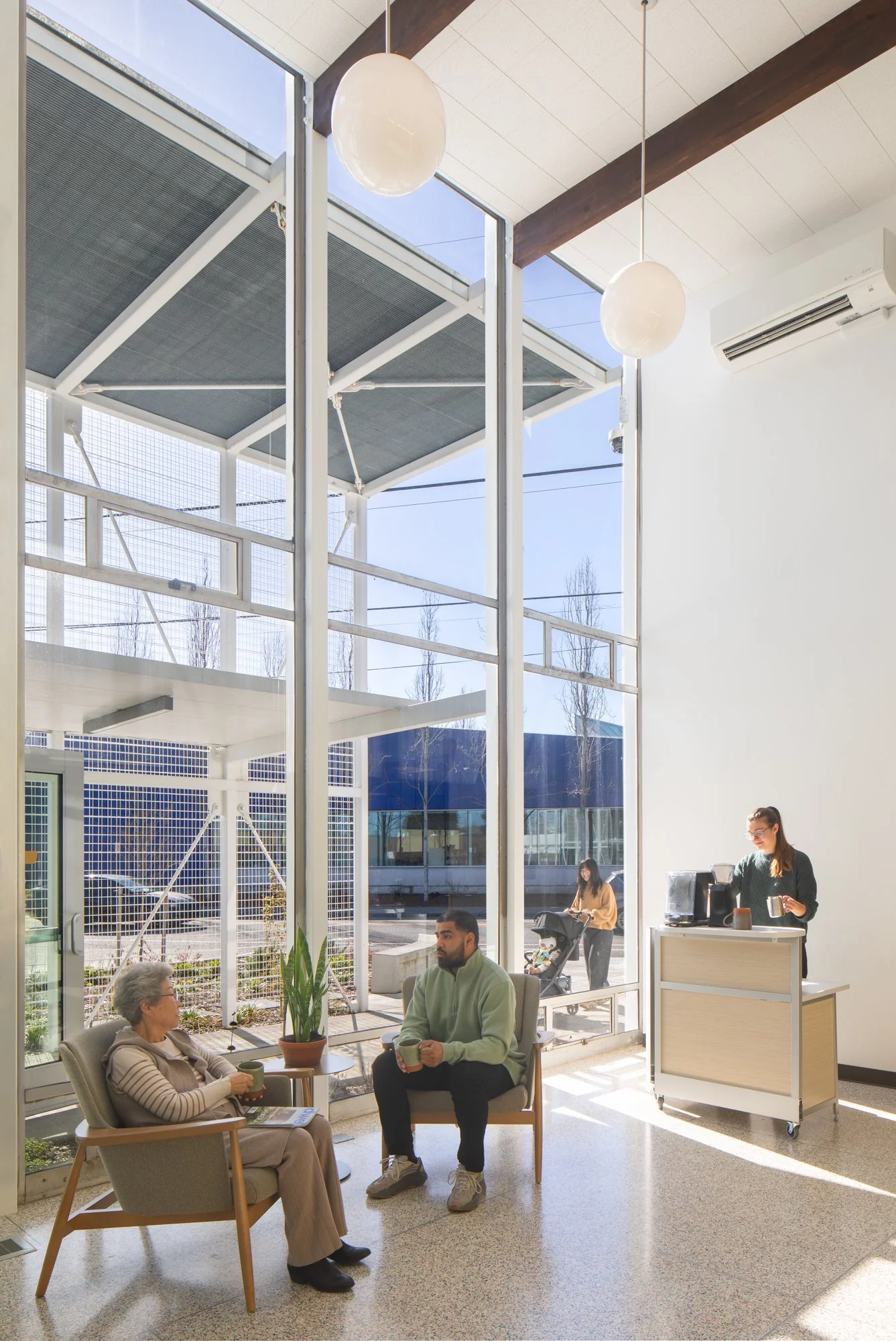
photo credit: Lara Swimmer
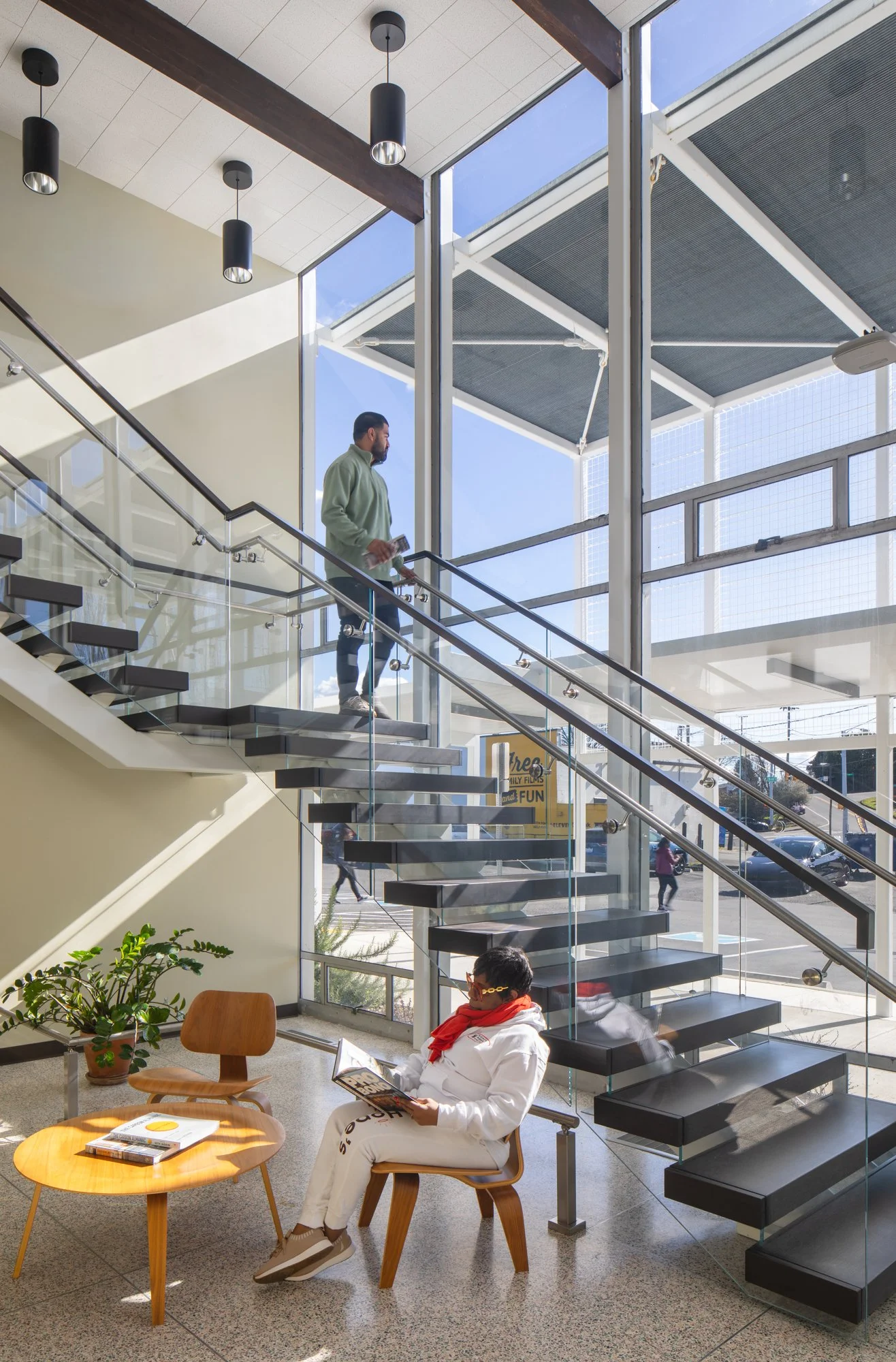
photo credit: Lara Swimmer
When Skyway’s only brick-and-mortar bank announced its closure, residents were deeply affected due to the continued disinvestment. In response, the community proposed that the bank donate the site. Inspired by local advocacy, the bank agreed, and in October 2021 donated the property to establish a community resource center. With interim stewardship from the King County Housing Authority, the property transfer was completed, and renovations began to transform the bank into a community-focused resource.
Schemata Workshop was re-engaged to lead the design process, building on our earlier community center planning efforts. This prior work helped secure $2 million in county funding, along with additional support from the Washington State Department of Commerce.
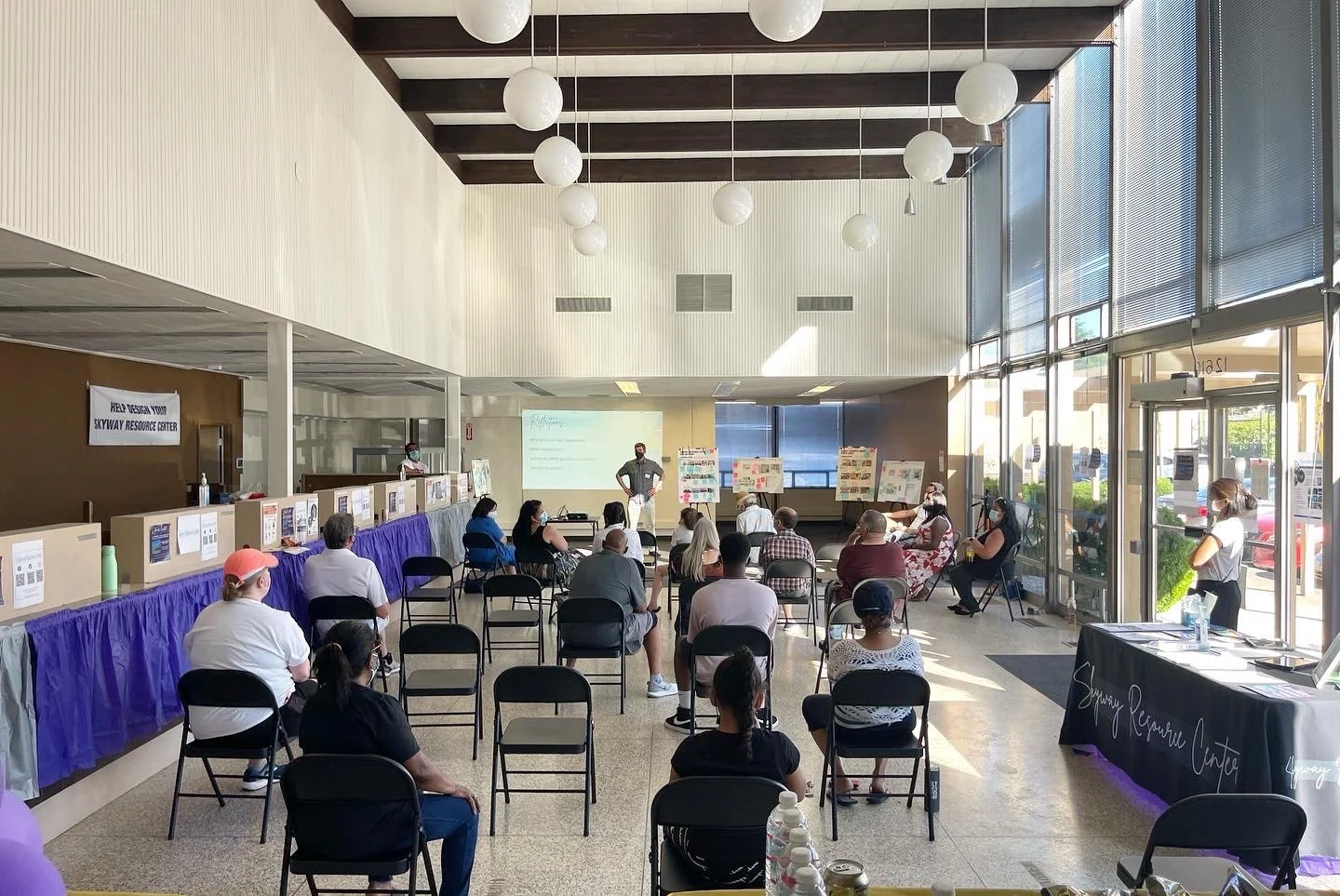
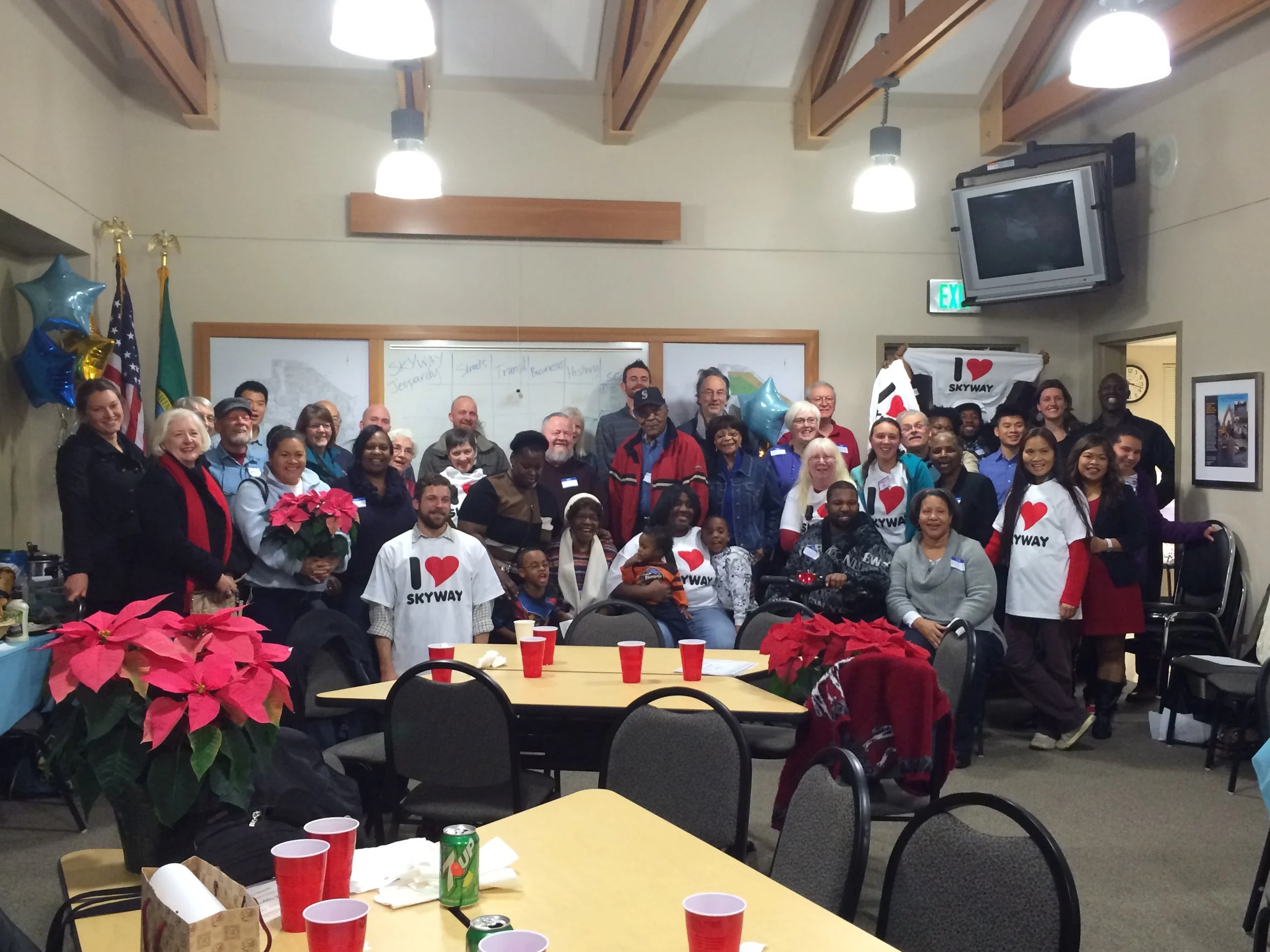
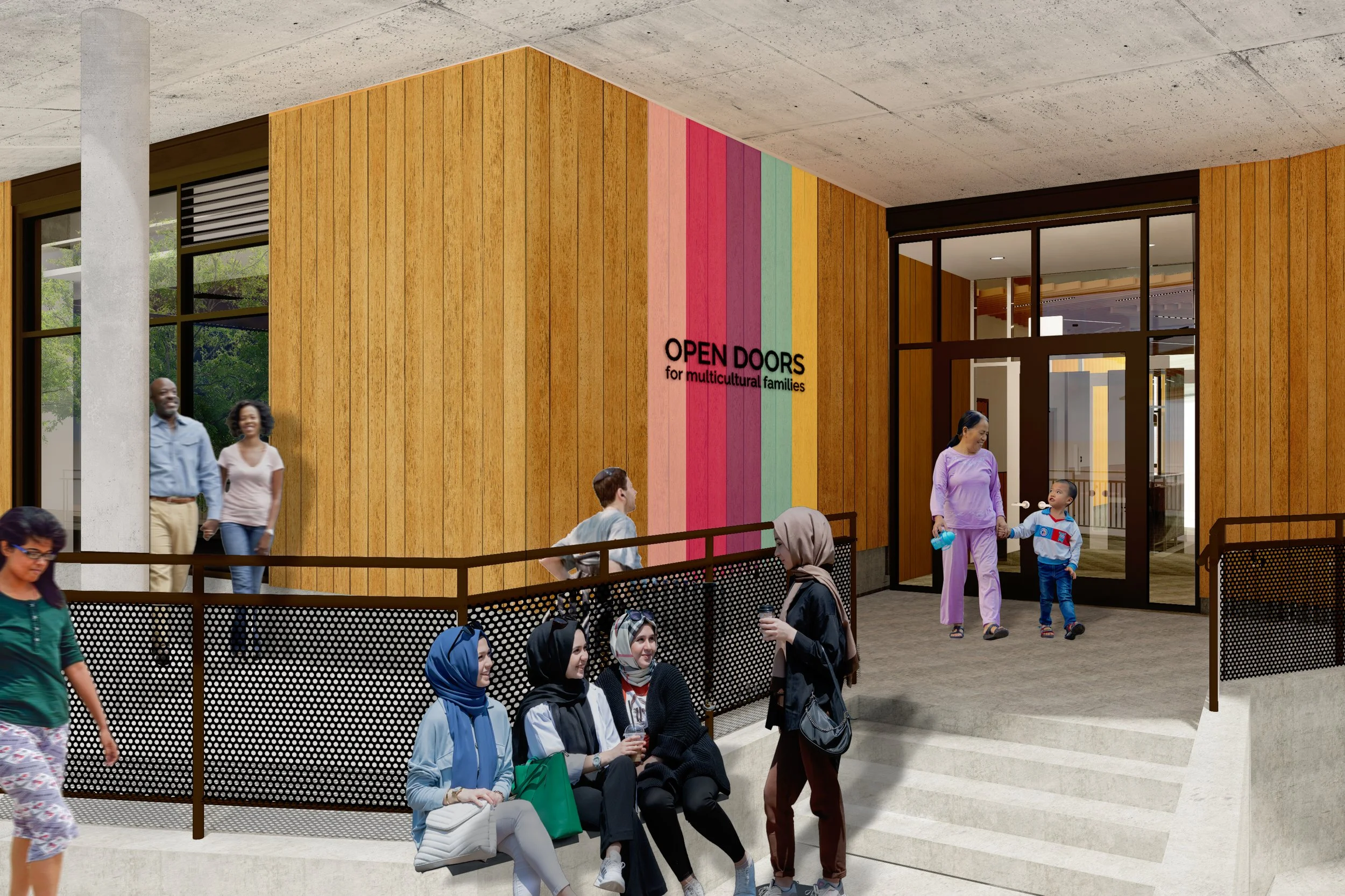
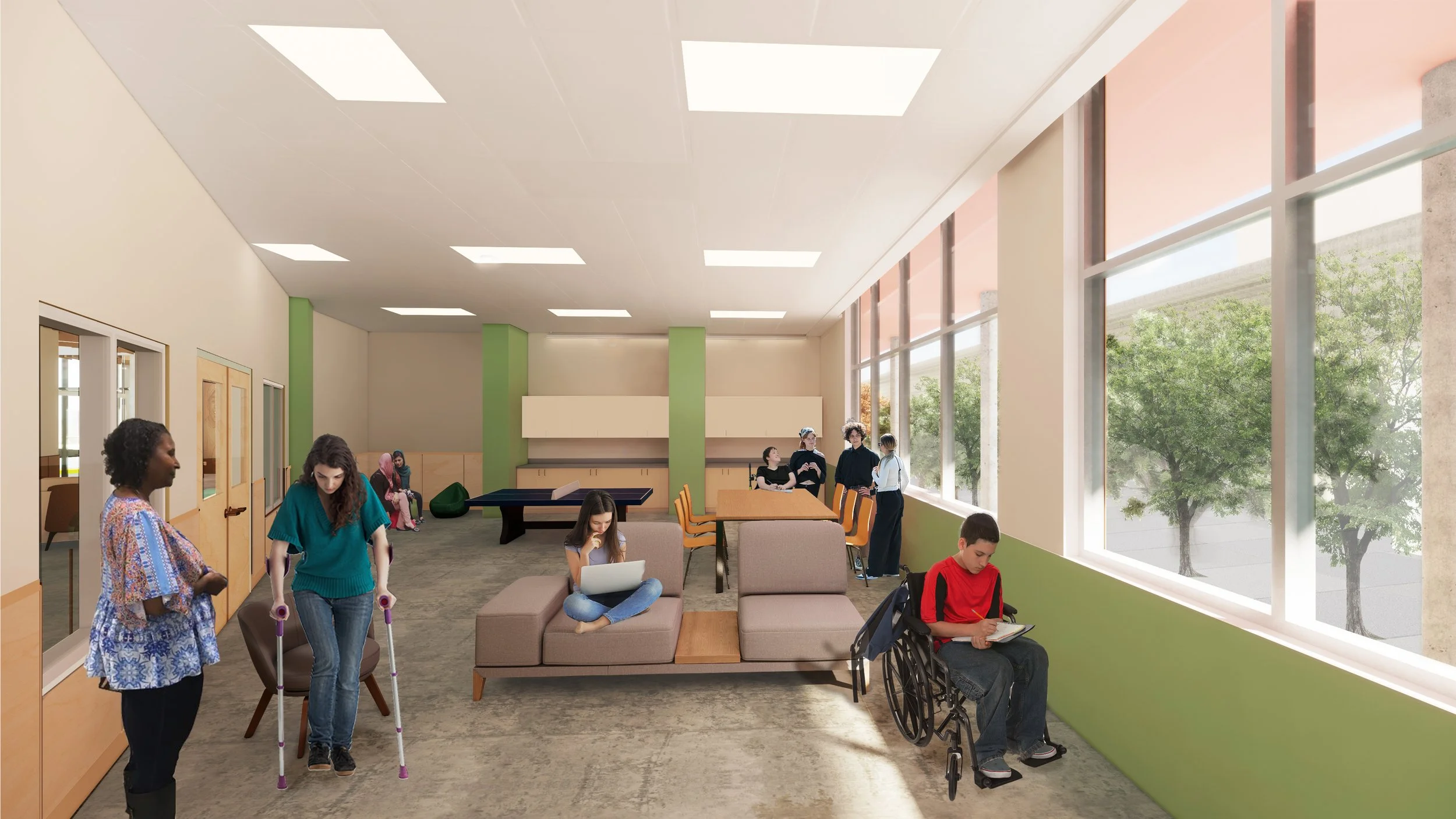
Vital to the successful outcome of this project were the 10 months of community design. Schemata, with the help of the community, organized a comprehensive series of community meetings and workshops. Through pop-up events and six design workshops in 2022, residents shaped the vision for the resource center. The final plan accommodates up to 12 potential tenants, including public agencies and local grassroots nonprofits providing services such as youth mental health support, food services, and a tool library. The site will also continue the tradition of hosting the summer outdoor cinema, along with a farmers market, and mobile services like dental and veterinary care.
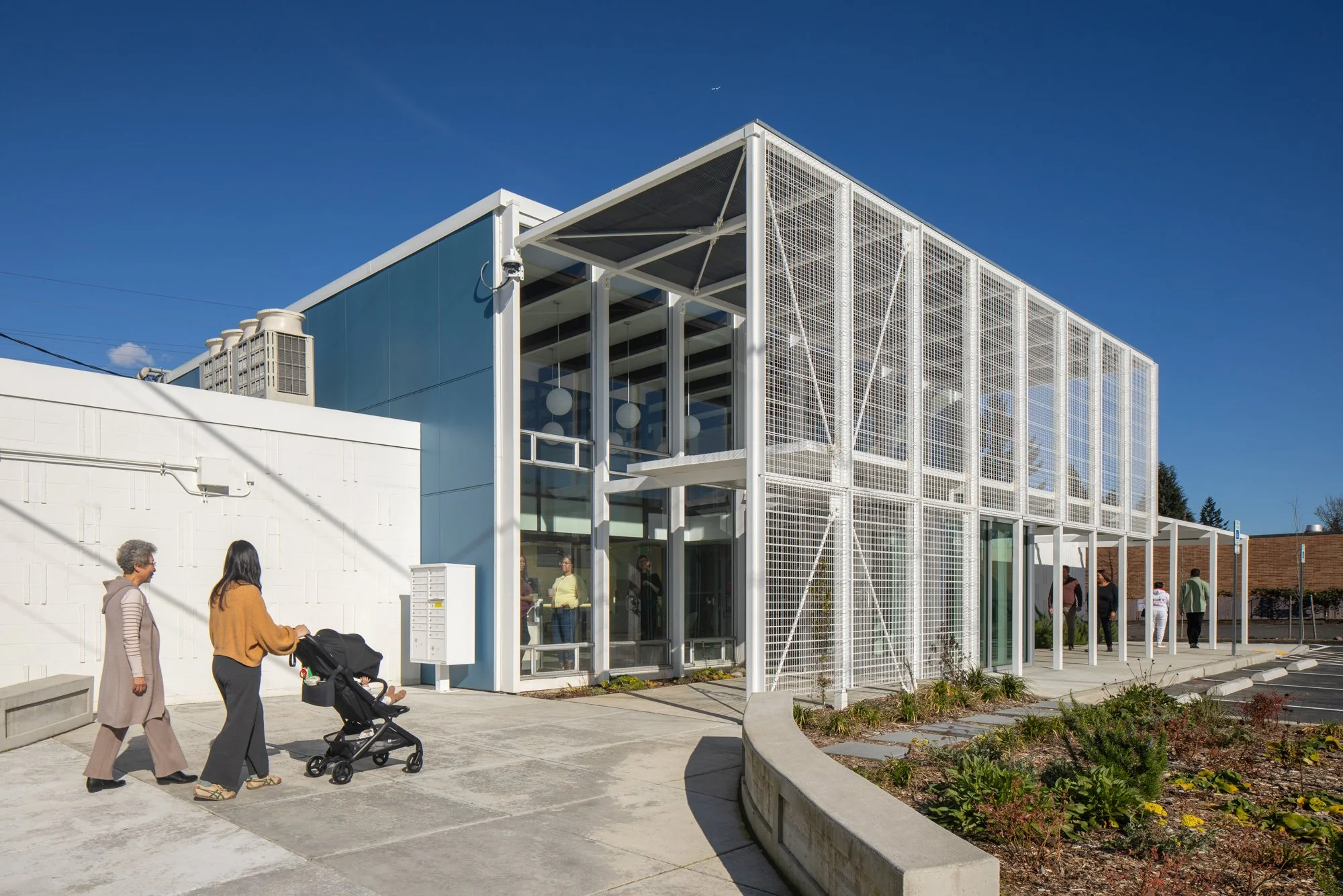
photo credit: Lara Swimmer
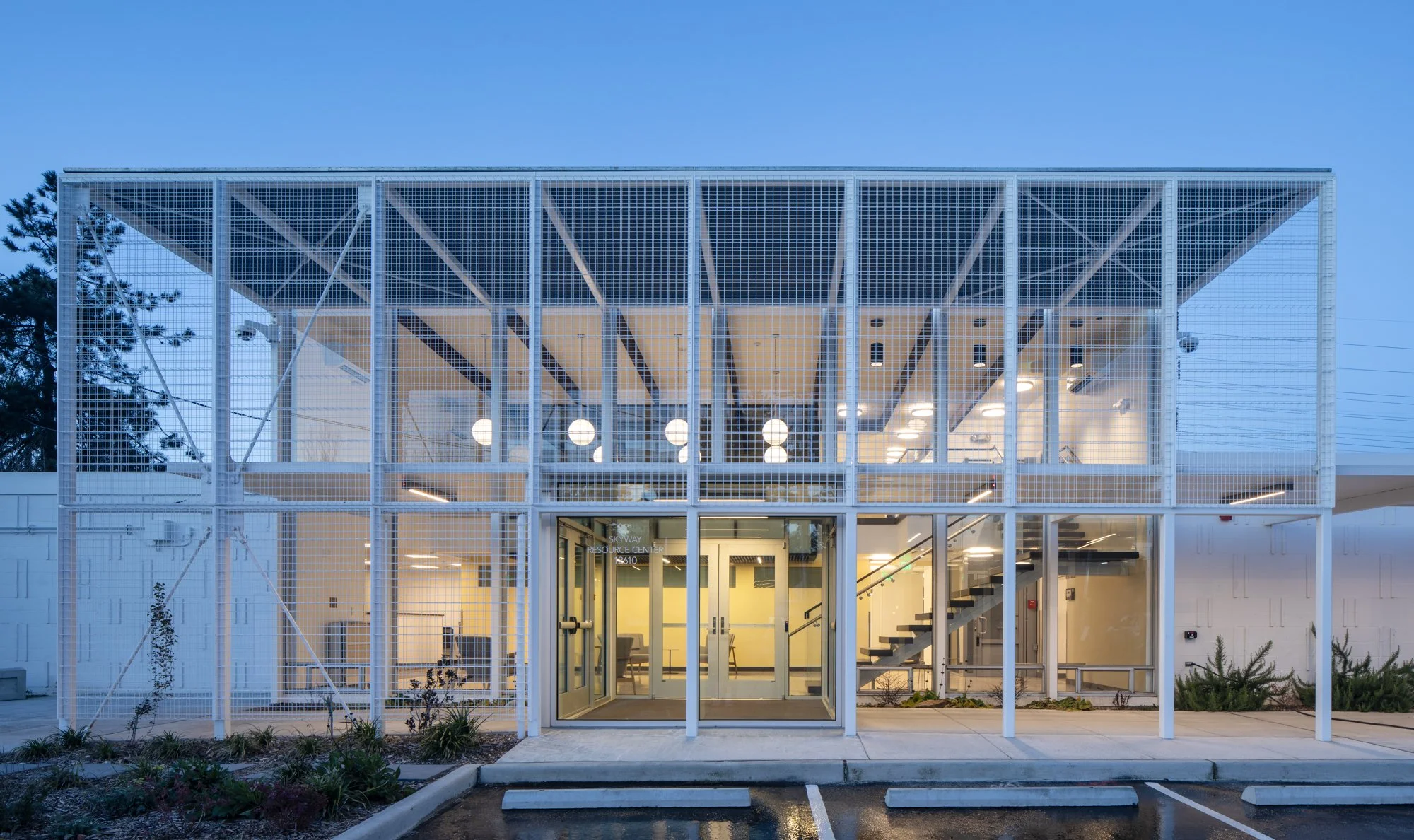
Architecturally, the challenge was to transform a mid-century modern bank into a welcoming, community-oriented space. The primary change to the exterior of the building is a full-height trellis which extends the original building’s entry canopy columns to shade the south-facing glass façade, improving thermal comfort while allowing for natural daylight and biophilia (greenery). A new vestibule and reoriented entrance also strengthen connections to the King County Public Library across the street.
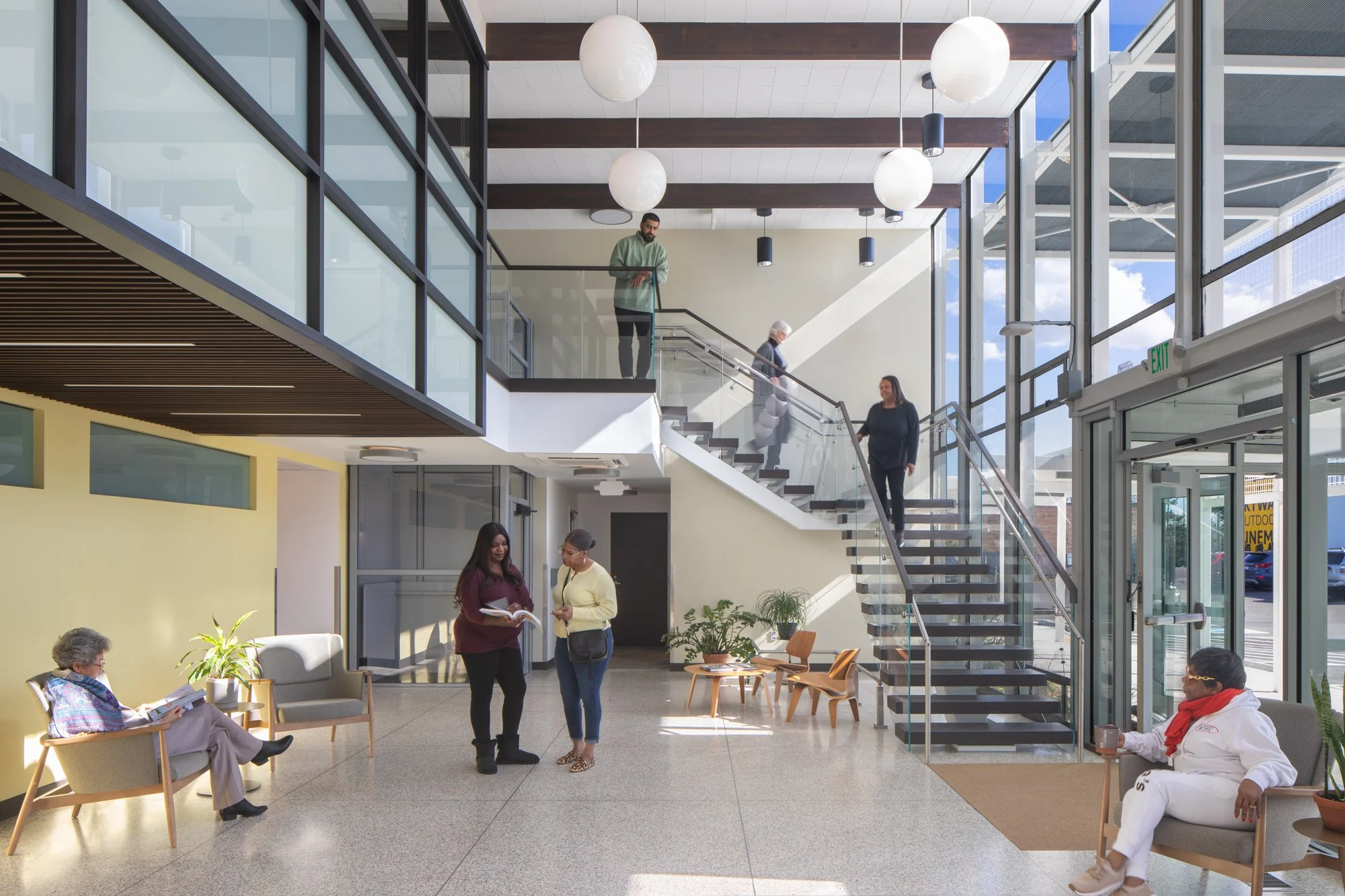
photo credit: Lara Swimmer
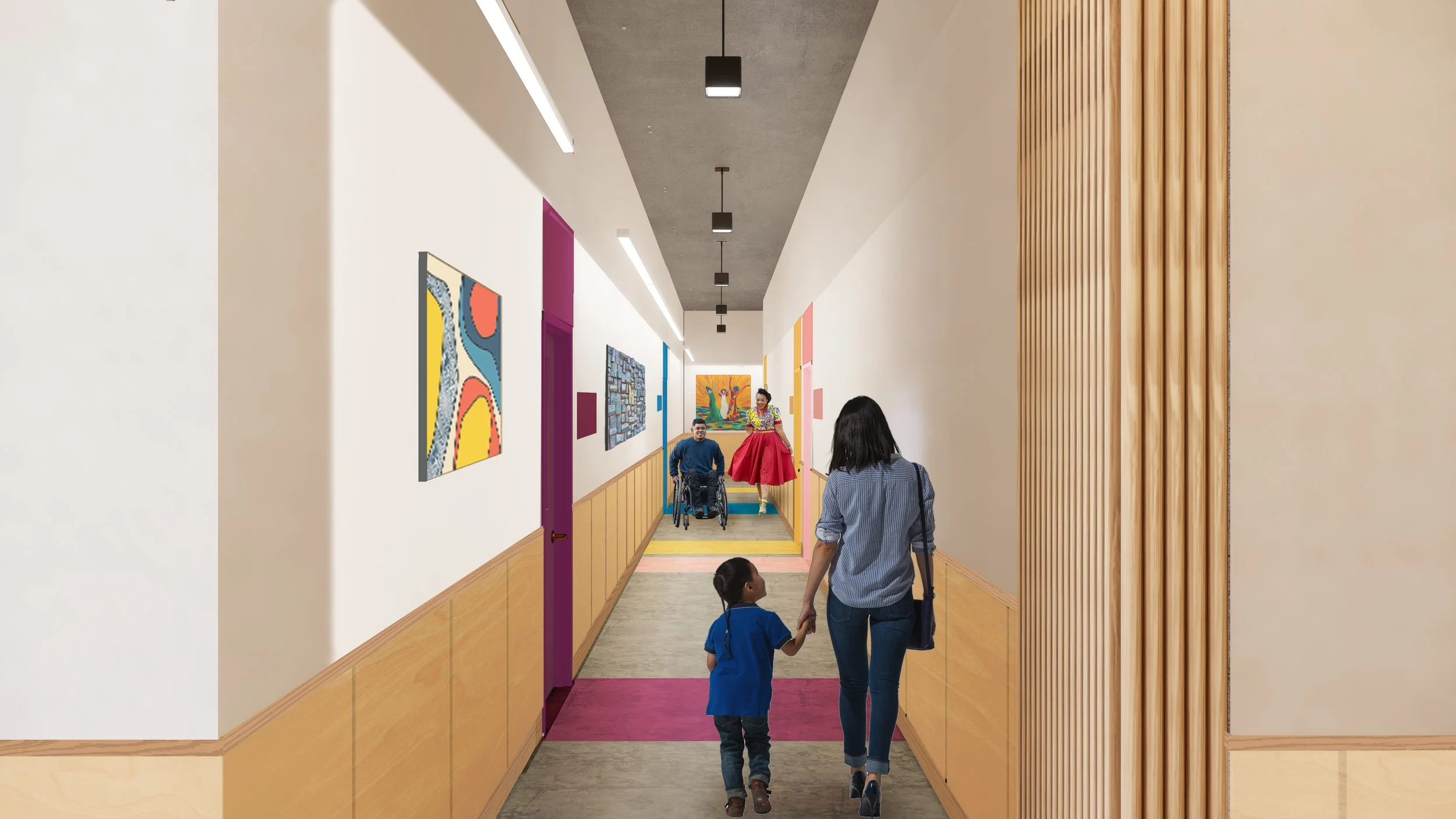
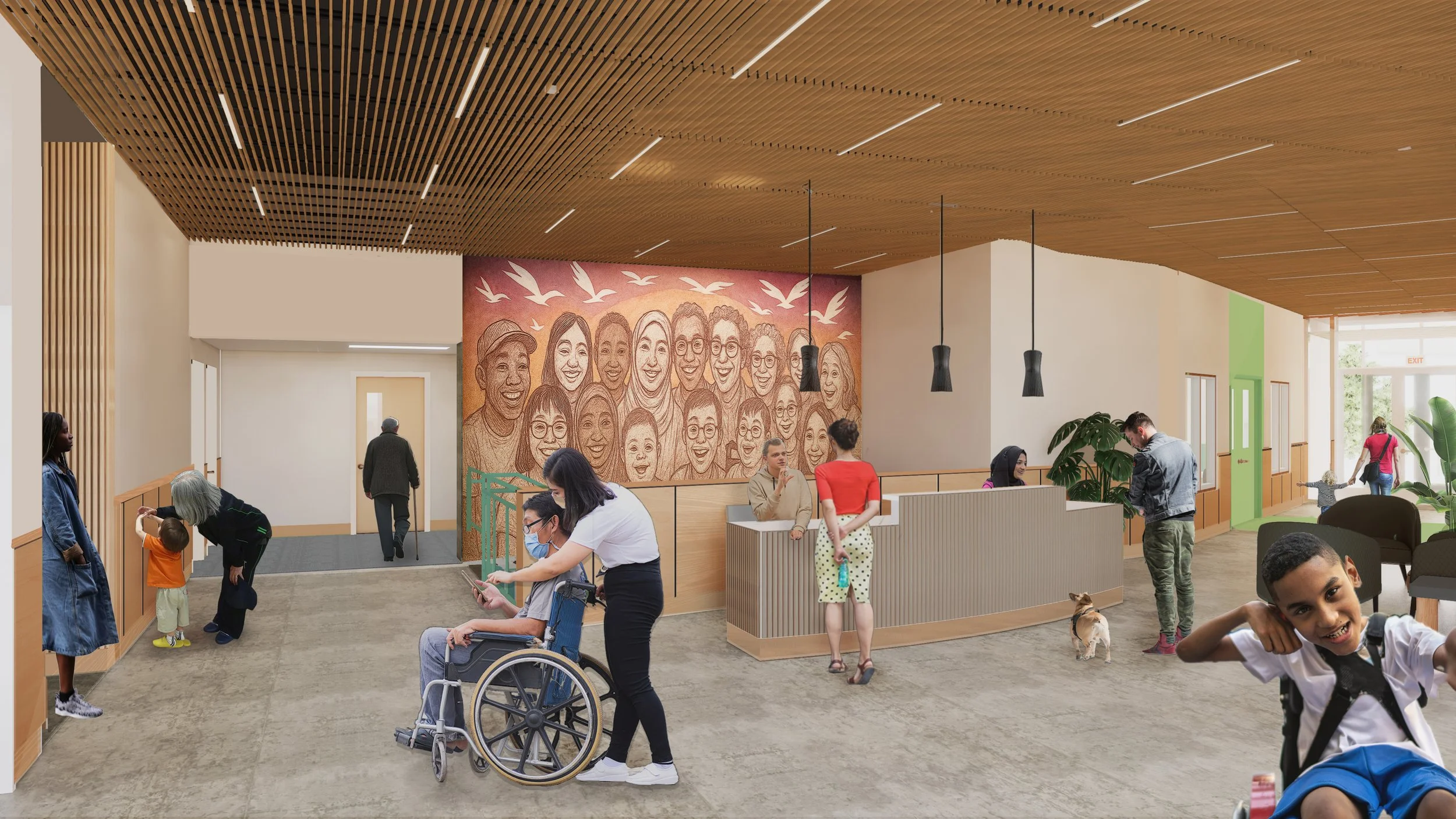
Interior changes prioritized accessibility and honoring the original mid-century modern design. The stairway was relocated from a secured back-of-house area of the bank, out into the lobby as a prominent design feature. A new second-floor conference room extends over the lobby, providing flexible meeting space while preserving the building’s double-height volume.
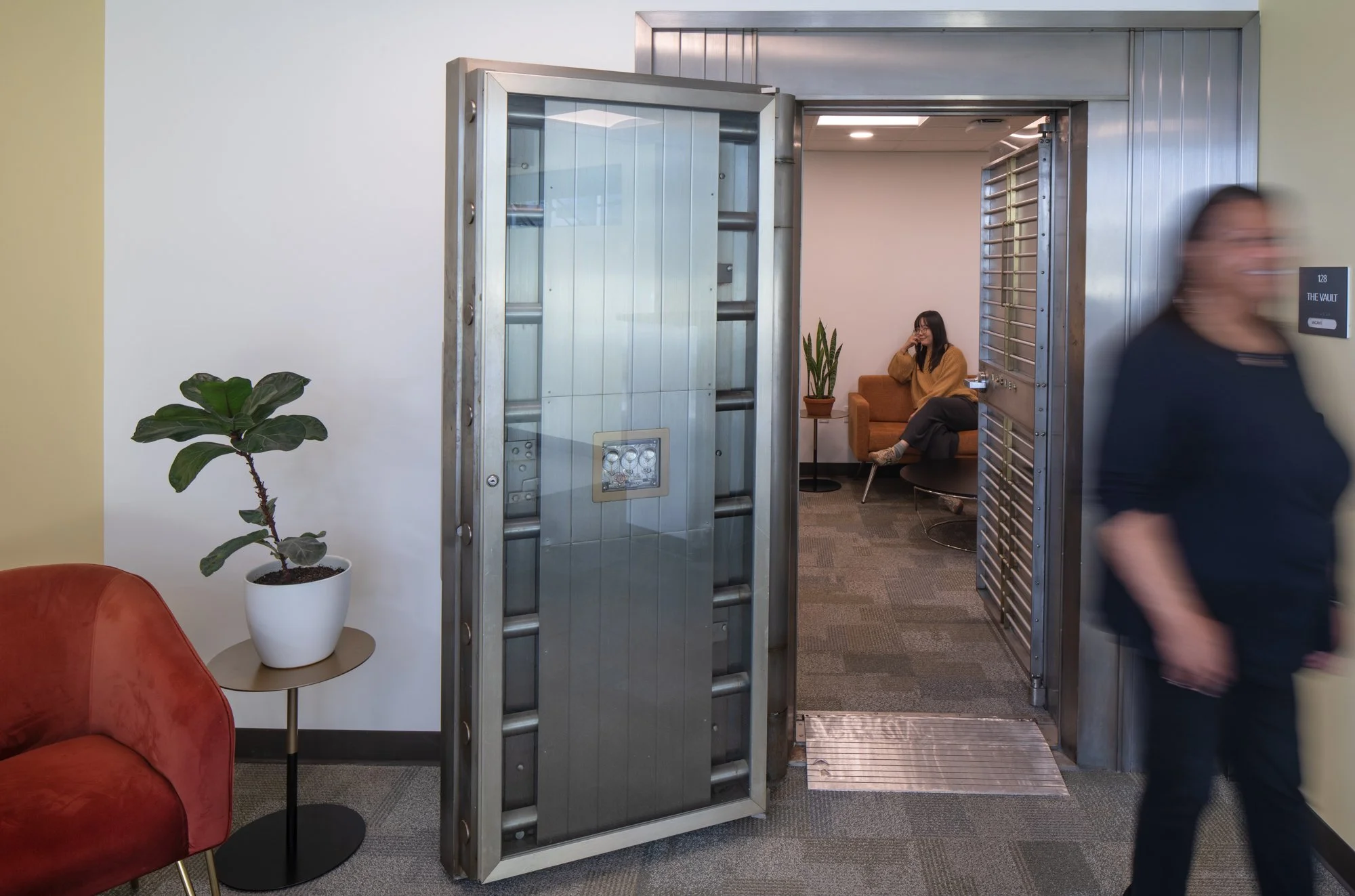
photo credit: Lara Swimmer
Throughout the renovation, key architectural elements were preserved, including the minimal structure profile, mid-century concrete block, globe light fixtures, exposed wood beams, and original bank vault door. Repurposed safe deposit box doors will be incorporated into the “Vault” meeting room, accompanied by an art installation titled “Safely Deposited” that tells the story of the project as a community-led effort.
This project reflects the resilience and power of the Skyway community. By preserving and upgrading the bank, Skyway transformed the loss of a community service into a community resource space, securing it for their future.