Highlights from the 2011 National Cohousing Conference

This is one of the few conferences that I attend annually where I wear more than one or two hats. At most conferences I’m an attendee and frequently I’m a presenter. However, at this conference I also wear the hat of National Board Member, professional (cohousing architect – aka “expert”), and cohouser (member of a forming cohousing group). While it is not uncommon to have these other identities at other conferences, they are not repeatedly highlighted throughout those conferences in the same way. Keynote addresses were made by Liz Walker, Ross Chapin, Katie McCamant, and Chuck Durrett. Common theme amongst all of their talks were around the importance of relationships and the resiliency of communities. Liz spoke about the Ecovillage she lives at in Ithaca, NY. She talked not only about the cohousing communities that are part of that Ecovillage (FRoG, SoNG, and soon to be TREe), but also of the sustainable agriculture and educational outreach that are integral to their community life. Ross Chapin shared a beautiful collection of slides that illustrated the concept of “pocket neighborhoods” – which is also the title of his recently published book. Katie McCamant inspired us with stories of the early days of cohousing when she and her husband/partner Chuck Durrett recruited friends to help edit/distribute the book which has become known as the “cohousing bible” from their basement of their first home. Chuck Durrett closed the conference stating that cohousing may be at a tipping point in mainstream America; there is a heightened awareness of cohousing as an alternative housing model that is attractive to a variety of families and individuals. The keynote addresses provided a lot of food for thought and inspiration to go back home and try to build community wherever we can.

This year the Board devoted a considerable amount of effort on advocacy for affordable housing. I helped the conference team develop a presentation track on the topic, inviting leaders from the DC area who worked both at the regional and national level on issues of affordable housing. There was lots of interest from conference participants in learning how to incorporate affordable housing into cohousing communities and fostering connections with national housing organizations that are also working on issues related to affordability.

Other sessions – eldering in cohousing, developing meal program, facilitating connections among residents. Great sessions for those living in community as well as in forming groups.

Tours – I took all day rural tour of Liberty Village, Ecovillage in Louden County, Cotactin Cohousing and Blueberry Hill. Distinct contrast to the other communities on tour – Eastern Village Cohousing and Takoma Village Cohousing. Demonstrated the wide range of physical form, rural-to-urban settings, and personalities that comprise the broader cohousing community.

For fun there was the annual dinner and auction. I couldn’t help notice the remarkable difference of this event from my first conference 6 years ago to now. As a board member, I was impressed with the significant improvement in the Association’s ability to raise money…while making it fun for the attendees.

As a table captain, I decided to up the chances for fun by playing musical chairs. - I took the liberty to have participants change seats twice between courses – giving them a chance to mix up the group and encourage many connections to be made during dinner.

During the dinner, we honored Dene Peterson of Elderspirit Cohousing with a Lifetime Achievement Award. I told my table (comprised mostly of young people) that they should all take note and strive to be like Dene. We should all be so privileged to be recognized by our peers in the same way some day.

The conference also marked the end of a year-long search for a new Executive Director for the Cohousing Association. The three finalists were invited to attend the conference (on their own dime) and were interviewed in formal interviews and numerous one-on-one conversations with board members. After the 3 solid days of being “on”, I was impressed with the caliber of our candidates. It was a difficult decision for the Board because we were in the fortunate situation of having 3 highly qualified individuals to select from. I think we would have been happy with any one of them. But our job was to choose, and I believe that our new ED has the skills, knowledge, and grace to take the Association to a new level of professionalism, advocacy, and financial wherewithal. (The new ED will be publicly announced shortly).

One take away from the conference is the concept of “being a communitarian”. While I’ve been involved with the communities movement for a while, I had a heightened awareness of what it meant to be a communitarian – which I think allows for a graciousness towards others that is rarely seen in popular American culture. I saw an intentional effort not to judge people based on appearance and behavior but to meet individuals where they are and to assume good intent until proven otherwise. This is hard behavior to adopt for someone like me who was raised in a highly critical family. It is a skill that I am starting to develop and I saw others exhibit their skills in many ways - they way they were welcoming of newcomers, of their acceptance to those who looked/acted different, and how they interacted with one another with a high level of respect and regard.

Leaving the conference, I feel a deep gratitude for the elders, board members, fellow cohousers who are trying to create a sustainable planet, one neighborhood at a time.

City Chickens Part One: Taking the Chicken Plunge

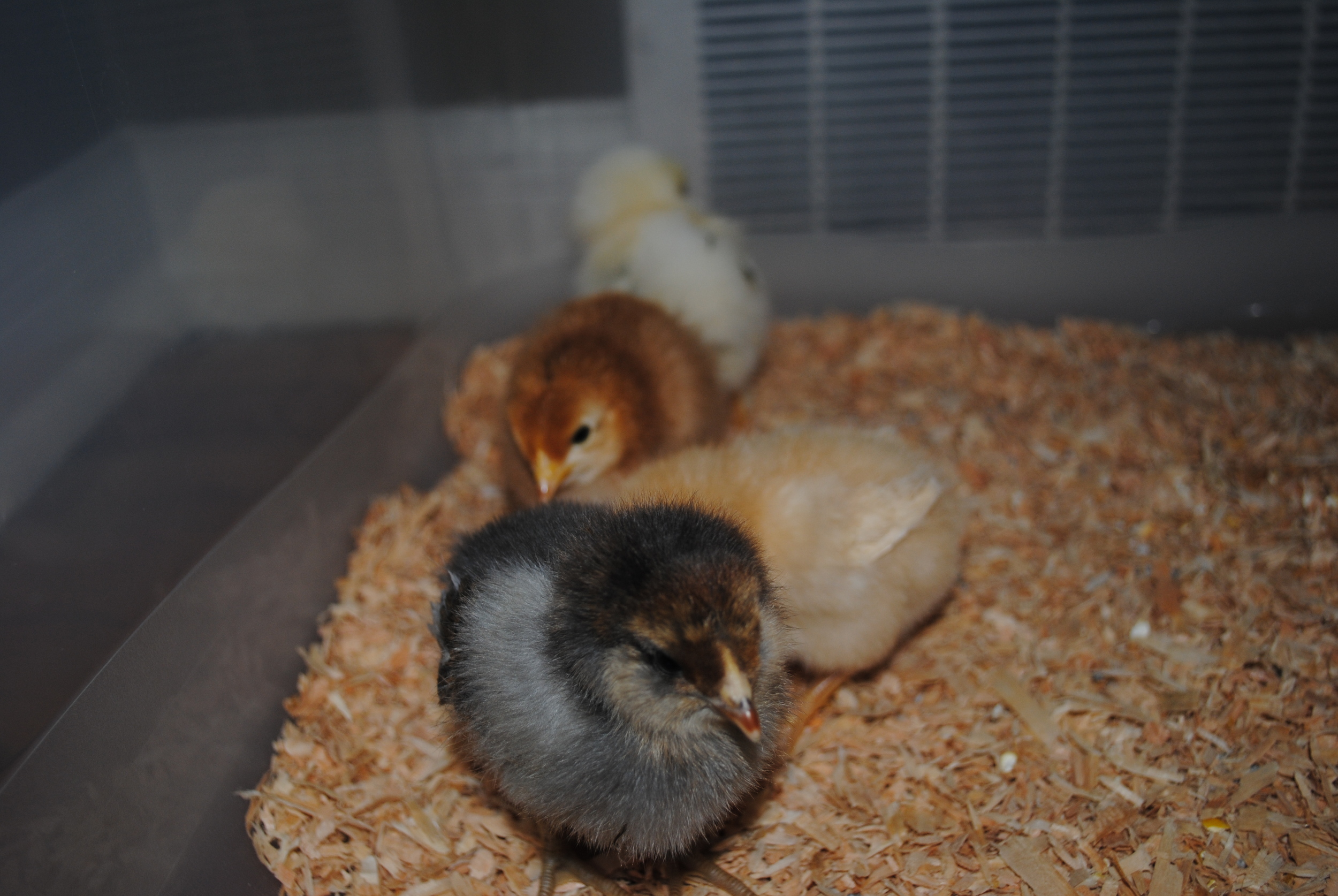
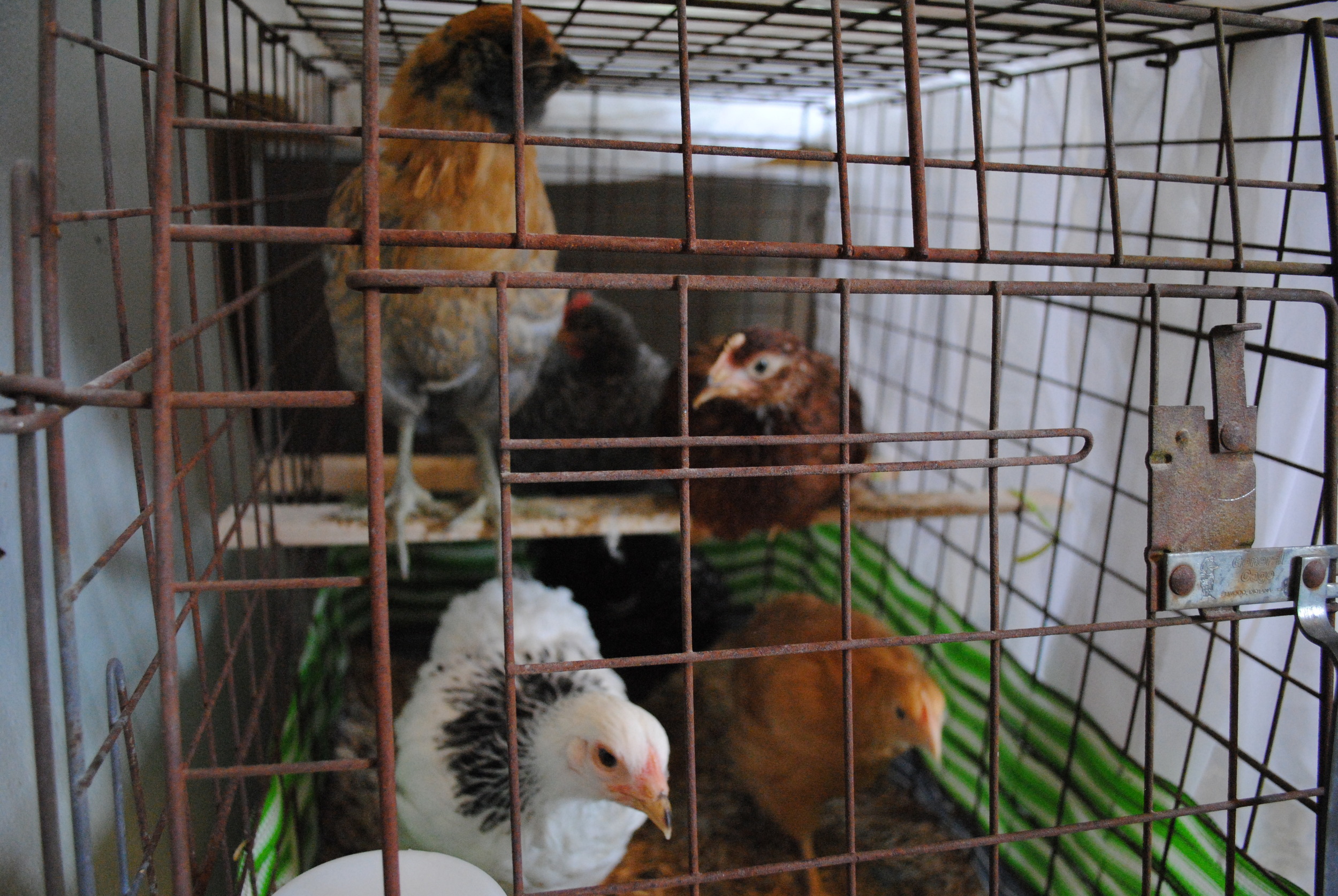
[caption id="attachment_1882" align="aligncenter" width="700" caption="Rosie (Rhode Island Red), Buddha (Brahma), Butch (Americauna), Lemon (Buff Orpington). Not shown: Star (Silver Laced Wyandotte), Zebra (Cuckoo Maran)"][/caption] Two months ago my housemates and I felt inspired to take our desire for local sustainable food to the next level; we got four baby chickens.  These four new household members took up lodging in our office in a new 94 quart plastic tote lined with some wood chips. Apparently baby chickens are not very picky about their housing and were happily chirping and scratching away within minutes of arriving.

Four soft downy baby chickens huddled in a pile under a brooding lamp is just one of those irresistible sights. So irresistible, we quickly had two more baby chickens to add to the United Nations of Chickens. The city limit is eight chickens after all! One of my housemates, affectionately know as the chicken guru, can tell you the breed of each chicken but the rest of us know them as: Rosie, Buddha, Butch, Star, Zebra, and Lemon.

There were a lot of decisions to be made about how to raise our little girls even in the early stages. Do we give them the antibiotic feed recommended for little baby chicks? What kind of bedding should we use? Do we give our babies bird electrolytes? How warm do they need to stay? Will there really be dust everywhere? How do we keep them from getting their food clogged with shavings all the time? Should we really feed them eggs?

...........to read about how we answered these questions link to the full blog post on my gardening project Edible Dirt.

[caption id="attachment_1884" align="aligncenter" width="700" caption="The chickens got a temporary upgrade from their original plastic tote while we start to make plans for coop building."][/caption]

The Italy of the Italians Part 3: Ferrara, City of the Este Dukes (and Great Cycling!)

Ferrara was the second city visited on our tour of Emilia Romagna, but only in sequential order, as its qualities are second to none. A city of 130,000, it is substantially larger than Mantua, and exhibits the extra layers of complexity one envisions accompanying larger size. The Este family governed Ferrara's rise to prominence, which lasted from the 13th through the 18th centuries. Like the other city-states visited, the ruling family's patronage attracted great artists. Imagine say 5th Avenue in New York (old money), combined with the Village or Williamsburg (the newly minted, of course, excluded); or, the patrons living (often housing) the artists they employ, having them at their disposal for a fresco here, a marble bust there. Perhaps some lines of Latin verse? Such a scenario would be difficult to reconstruct today, for the intimate connections between artisan and benefactor are of a different nature, as art today is more-often-than-not seen as critical lens through which to view the elite, not one as a means to legitimize their regime. Suffice it to say that working for the man was seen as a good gig, not something one should shun, and this association is perhaps one factor that lead to urban environments of remarkable quality, even those in a compact package. [caption id="attachment_1815" align="alignnone" width="700" caption="Ferrara Night Scene"][/caption]

Unlike the near-future regimes of say, France, the rulers of the Italian city states-drew a closer association between themselves and the cities they inhabited. The state was them, it was true, but the state was of a far more manageable size, perhaps another attribute leading to artistic fruition. When France's Louis XIV wanted a new home, he abandoned the Louvre in Paris, and built his new palace 30 miles outside of Paris at his father's (Louis XIII's) hunting lodge at Versailles, as distant from the poor (that his oppressive rule helped to galvanize, to the great detriment of his grandson, Louis Seize) as possible. He purposefully abandoned the city, and his court (and the artistic trappings of courtly life) joined him. While the Italian dukes did have country estates (as noted in the Mantua post), to my recollection they were more weekend retreats -- not permanent escapes -- as was Versailles or even the Hapsburg's Schoenbrun. Italian dukes were firmly planted in their cities, and they wanted their cities to be just right, as in evidence by the fine buildings they (and their courtiers) commissioned, and the vast art collections their urban domiciles housed (not unlike Henry Clay Frick 400 years later?). Although far from what one would call enlightened or democratic rule, this close association between the ruler and the ruled was a magnet to any artisan desiring both recognition and livelihood.

[caption id="attachment_1823" align="alignnone" width="700" caption="Castello Estanse"][/caption]

In Ferrara the hierarchy of ruler to ruled is clearly displayed, and was a key determinant in the city's urban form. Dominating the center of Ferrara is the Este's early domicile, the Castello Estense, whose origins date to the late 14th century. It is easy to imagine the castle being surrounded by a more rural landscape, one that would eventually transform into the city. The Castello is a fortress, and does not project the refined tastes one associates with palazzi built by the Medicis in Florence, or even the Estes' future palazzo down the street. Upon reflection, the castello's more fortified appearance makes sense: cities were reestablishing themselves as the centers of society for the first time since the Roman Empire, and they were still pretty rough places to live. That roughness was reflected in the lack of urbanity of both the rulers and their architects, as the rules of decorum governing the arts were still nascent, still in development. Rural precedents were all that was available -- where castles dominated -- not palazzi. The evolution of the palazzo in its familiar form resulted from architects (and patrons) crafting a new typology, one that reflected a new type of urban living and governance. Pictured below is the successor palazzo to the castello pictured above, and built 100 years later. A few blocks down from the castello, it is squarely within the typology associated with Italian palazzi, (and its derivative French Hotel): a simple box, with regularly arranged yet minimum openings, arranged around a central courtyard, and accessed through a quite large, gated archway. A plan that is remarkably similar, actually, to that of the castello, yet this time reflecting a greater expectation from the owner that their domicile express not only fortitude, but design savvy as well. Savvy displayed by the very artisans a growing city and patronage was available to groom.

[caption id="attachment_1816" align="alignnone" width="700" caption="Piazza Diamante"][/caption]

[caption id="attachment_1817" align="alignnone" width="700" caption="Piazza Diamante Detail"][/caption]

Above is a detail from the Diamante, and it reveals its spectacular stone facing (no plaster here!), where one can see the thousands (!) of diamond-shaped profiles cut into the stone blocks. The diamond was the symbol of the Este family, and formed the motif for the building's cladding. The diamond facing is imparts a fine grain the facade, and foreshadows (by about 500 years) the current fetish many architects have with finely delineated building surfaces, such as the Future System's Selfridges building in Birmingham, England. In all honesty, I had never heard of the Palazzo Diamante, and after seeing it, why not? It is spectacular! It currently houses, needless to say, a superb art collection.

[caption id="attachment_1792" align="alignnone" width="700" caption="Birmingham Selfridges Building (Wikipedia)"][/caption]

The Diamante is just on the edge of the old town's transition into the new. Relative terms, because the transition occurred in the 16th century. Planning wise, the transition meant going from the crooked, organic streets that were laid out (or better put, evolved) during the Middle Ages and Renaissance, to stick straight streets, and what was to become the planning norm in both Europe and North America. The transition to the gridiron revealed a streetscape that reminded me more of colonial America than Italy, in that the buildings were old, yet arranged in a highly regular, rectilinear manner. Quite a nice cross-section in time. But as in virtually any European city, I confess it was the medieval streets that held the greatest mystery, charm, and beauty. It is, in fact, the clearly demarcated evolution from medieval to modern urban planning that led to Ferrara's recent designation as a UNESCO World Heritage Site.

[caption id="attachment_1818" align="alignnone" width="700" caption="Post Renaissance Straight Street"][/caption]

[caption id="attachment_1739" align="alignnone" width="700" caption="A Typical, Organic Street"][/caption]

Ferrara is resplendent with the twisty and curvy, and there is a particular street -- Via Volte -- that combines the labyrinth streetscape with a series of archways and bridges that is unlike any street we had before seen. Adding to its formal singularity was that is contained little retail or other public destinations, making it exceptionally quite, even sublime. Streets like the one pictured below occurred for block after block after block, with the shade to light rhythm afforded by the bridging elements creating a soothing progression.

[caption id="attachment_1825" align="alignnone" width="700" caption="Via Volte"][/caption]

[caption id="attachment_1826" align="alignnone" width="700" caption="Bicycle, Via Volte"][/caption]

Contrasting the above mysterious mazes, are Ferrara’s almost complete series of city walls, which date back to the 13 and 14th centuries. Such walls were common place amongst any city of size throughout Europe, but most have long been torn down or simply returned to the landscape, making Ferrara's intact walls a treasure to the community. Walls were of course defensive in nature, but formed an even more important function: that of regulating commerce. The old guild systems and the city's rulers held a tight grip on who was permitted to do business within the city, a grip they zealously guarded. During the reigns of the guilds (and for that matter, until quite recently), the main revenue for cities (and countries) was taxing goods that originated from outside, with walls forming clear and secure venues to extract specie from foreign merchants. Today, the remnants of the walls still demarcate many of the entrances into the city, albeit without gates or tariffs. The tops of the walls, and the frontage alongside them, has been turned into landscaped parks with stunning allays of trees forming regal processions. As found in so much of Ferrara, atop the walls are great cycling paths, boosting Ferrara’s reputation as Italy's premier cycling town.

[caption id="attachment_1736" align="alignnone" width="700" caption="Atop the City's Ancient Walls"][/caption]

Returning back to the central town, one comes across some familiar players: piazza, duomo, and shopping street (local retail, rest assured) but with a Ferrara twist: the hybrid Duomo/piazza/market place. I suppose it is not that much of a hybrid, as the typology of the Duomo is founded upon that of the basilica, whose origins were the Roman market place. In Ferrara the evolution has come full circle, as pictured below. The left (sumptuous facade) of the Duomo, is well, duomo-like, complete with religious iconography. Made of marble, its finely carved details and rich, pink hues lend majesty to it presence. Note that efforts for cladding the remainder of the Duomo were suspended so that the campanile (far right) could be completed. Between the two, however, funds seem to have run short, and the bones of the Duomo are bare for all to see: red brick. Nothing unique (or unattractive) here, as many such edifices remain incomplete despite their great age. What is intriguing about this incompleteness is that it fostered a change of use as well, from the sacred to the profane; or, form the house of God to those of commerce (yes, that profane), as borne out by the market stalls/sheds unceremoniously attached to the side of the Duomo.

[caption id="attachment_1827" align="alignnone" width="700" caption="Ferrara Duomo Main Elevation"][/caption]

[caption id="attachment_1843" align="alignnone" width="700" caption="Duomo Market Stall Elevation"][/caption]

Beyond and to the left (in the above photo) is one of the towers of the Castello. Again, secular and sacred authority sharing and defining the same, centrally located piazza. Pictured below, and on the opposite facade of the Duomo to the market stalls, is perhaps one of the most successful - yet elusive - public space topologies one could hope for, as I suspect it was created with no forethought whatsoever. It revealed itself while we were enjoying some wine at what is claimed to be Europe's oldest bar (circa 1300). As day fell to evening, we witnessed the gradual, casual, yet purposeful utilization of the low wall at the base of the Duomo as a meeting place, whose seating ledge transformed an otherwise blank wall into a prime gathering place. The photo below was taken just as we took our seats -- within an hour so many people had congregated about it that my photos were unable to clearly depict its architectural setting. The alley formed between the Duomo and the wine bar was barely 20 feet wide, and as long as the market stalls in the above photo. Sufficient foot traffic, a wall at just the right height, intimate enclosure, and the assurance of an audience were the key ingredients to ensuring this unintended meeting place its success.

[caption id="attachment_1744" align="alignnone" width="700" caption="Seating Wall along the Duomo"][/caption]

As much of a success as this unintentional, remainder space was, an intentional space was even more so, as bore out by its very active uses. Behind the arched-portal pictured below, was a courtyard space the housed the most visually exciting happenings during our all too brief stay in Ferrara. For consecutive evenings the courtyard hosted the practice of flag-teams. The participants appeared to be of high school age, with coaching from parents. For what future pageant they were practicing, I could only speculate, and it did not matter anyway, for the event was a joy to behold. The venue for the revelry was a large, flat, courtyard, enclosed by buildings perhaps 4 to 5 stories high. An exterior stair alongside one of the buildings provided a great prospect from which to witness the events. There were no shops along the perimeter, no restaurants, no cafes. Just a sufficiently large, unadorned, level, and enclosed public space. A simple space to house spectacular events.

[caption id="attachment_1740" align="alignnone" width="700" caption="Entry Portal into the Courtyard of Flags . . ."][/caption]

[caption id="attachment_1733" align="alignnone" width="700" caption="Flag Practice"][/caption]

Taken as an ensemble, the Italians have created the world's most beautiful cities, in all imaginable sizes. From large, to medium. to small, the cities were created by a people with an unmatched skill at designing, nurturing, and -- most importantly of all -- creatively using the public realm. Be they unintentional spaces, those paying homage to the powers that be, or spaces repurposed from uses far removed from their original intent, theirs is a culture that knows better than perhaps any how to create places to share and celebrate public life.

Next: Bologna, the City of Arcades!

A Wish for Leaders

I participated in Leadership Tomorrow (LT) this year and at the opening retreat last September a quote was read (see below) that has stuck with me.  As we draw near to the end of our program, I reflect on the 9 months of day long workshops, suggested readings, team projects, and discussions with fellow classmates and find myself re-reading it in a slightly different light. I recall the first time hearing it that I felt that these were things I wished for my daughter (who is 3 1/2 at this time). I read it again with the same hope for her, but also for those in my office, for myself, and for those in the Capitol Hill community who are doing bold and brave things. I also wish them for the leaders of our region, nation, and planet. A year ago, I wondered if LT would be worth it (both from the time and financial committment required), but looking back on what I've learned about myself and the region around me, the friendships I've made, and the hard lessons I've learned...it's definitely been a worthwhile investment.

If you have not heard about Leadership Tomorrow, visit this link to learn more. https://www.leadershiptomorrowseattle.org/theprogram.html If you're still unclear about it, don't hesitate to ask. I'm glad to share my experiences with you. And now for the quote:

A WISH FOR LEADERS

I sincerely wish you will have the experience of thinking up a new idea, planning it, organizing it, and following it to completion and have it be magnificently successful.

I also hope you’ll go through the same process and have it “bomb out!”

I wish you could know how it feels to “run” with all your heart, and lose horribly!

I wish you could find something so worthwhile that you deem it worth investing your life within it.

I wish you could achieve some “great” good for humankind, but have nobody know about it except you.

I hope you become frustrated and challenged enough to begin to push back the barriers of your own personal limitations.

I hope you make a stupid mistake and get caught red-handed and are big enough to say those magic words, “I was wrong!”

I hope you give so much of yourself that some days you wonder if it is worth all the effort.

I wish for you a magnificent obsession that will give you reason for living and purpose and direction for life.

I wish for you the worst kind of criticism for everything you do, because that makes you fight to achieve beyond what you normally would.

I wish for you the experience of leadership! --- Dr. Earl Reum

Stenciled Bikes

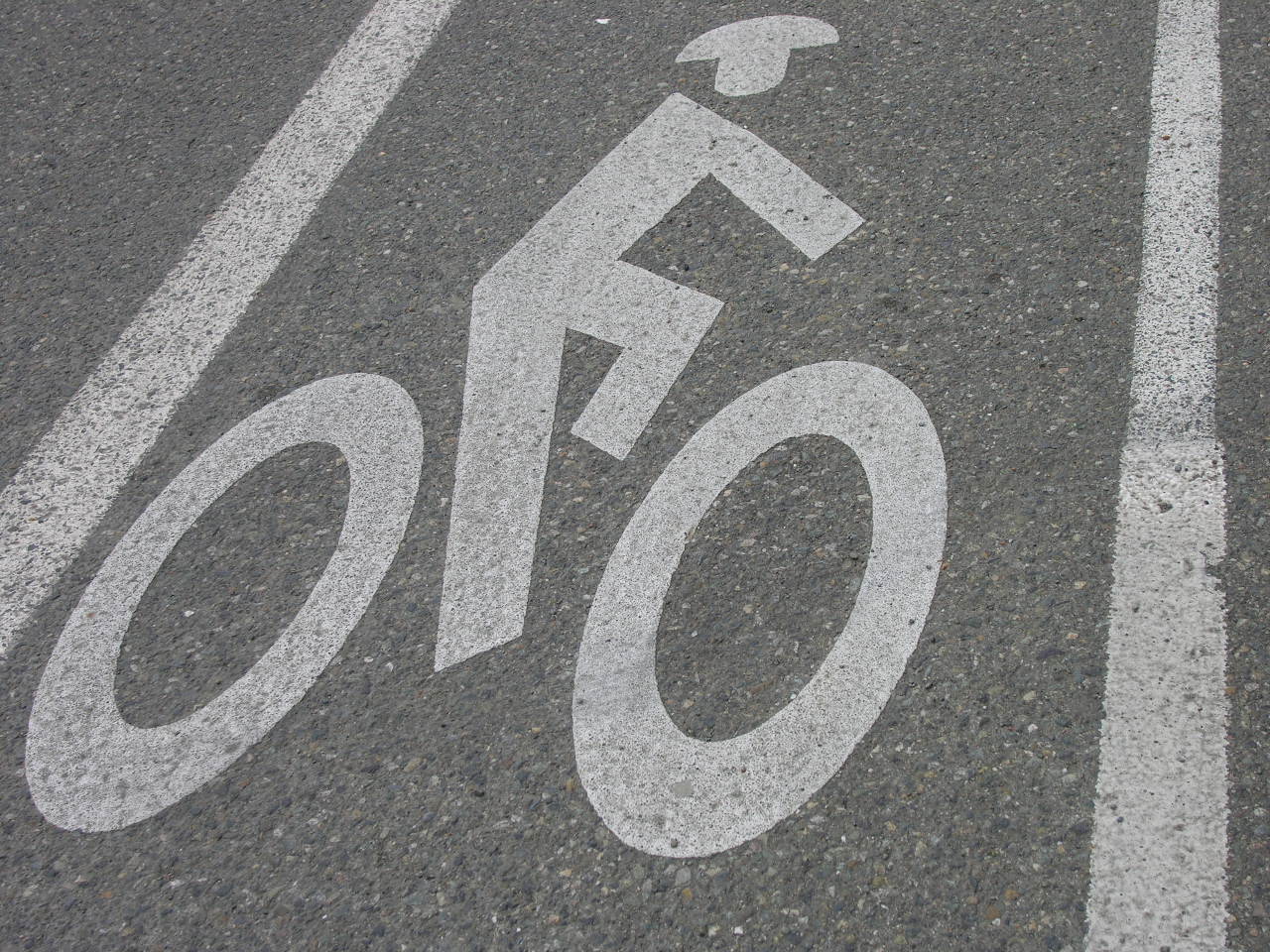
[caption id="attachment_1774" align="aligncenter" width="700" caption="Bike lane outside Schemata Workshop on 12th Avenue."]Bike Lane[/caption] Much like Katherine I decided that May, official Bike to Work month, was a great opportunity to recommit to biking to work.  I was a fairly regular bike commuter five years ago when I worked downtown and lived in Greenwood but since then I’ve either worked close enough to walk to work or was on the road traveling for work.  The biggest difference I notice about biking now versus five years ago is all the new bike lanes, green bike lanes at intersections and sharrows (shared-lane markings) painted on the city streets.  These white stenciled bikes painted on the streets definitely make me feel like a more ligitimate user of the roadways.  As a biker I’m always hyper-aware of the dangers present when on the road.  Simple things can lead to dangerous accidents when you are on your bike such as a car door opening while passing parked cars, a car turning right across my path without noticing me, a car pulling out of a hidden driveway, the unaware driver at the four way stop who hasn’t noticed me, a newly formed pothole waiting to devour my bike, and the list goes one.  There are some drivers out there that get frustrated sharing the roadway with bikes but thankfully I have personally found those few and far between. The more common problems I’ve encountered with cars are that we bikers are just not super visible.  The good news is the image of my bike painted on the street seems to go a long way to remind my fellow car-driving road users that I and other bikers are also using the road. Seattle bike system may not be perfect and we have some ways to go before I would truly call us a bike friendly city but I am one biker that is happy with the direction we are headed.

On one of my evening rides home this month I decided to take a detour through downtown and head home along Dexter. It was fun to see the new road improvements currently underway that will create more buffered space between cars and bikes.  Later when I was looking up information about the construction I was surprised to learn that Dexter is one of the highest used bike lanes in Seattle but currently does not actually meet SDOT bike lane guidelines.  This is soon to be changed! The upgrade to Dexter will provide a substantial buffer between cars and bikes.  Most studies show buffers decrease serious bike-car accidents.  Dexter was originally slated for a Cycle Track, a two way bike lane separated from car traffic, but there was  debate on how much added safety (if any) these Cycle Tracks provide and if they were a actually a good fit for Dexter given the uses and layout of the street.  After community feedback the Dexter design was ultimately changed to provide buffer space between cars and bikes but not a Cycle Track.  That said SDOT has other Cycle Tracks proposed throughout the city. Community groups and SDOT are currently working to develop Cycle Tracks in a way that both increases bike ridership while providing added safety.

[caption id="attachment_1775" align="aligncenter" width="600" caption="Dexter road improvements currently underway will add buffered bike lanes."]Dexter Road Improvements[/caption]

Dexter and the proposed Cycle Tracks are not part of my daily Greenwood to Capitol Hill commute but I’m still very excited for these projects.  New bicycle road improvements encourage more car commuters to become bike commuters. More bike commuters increase bike awareness for drivers and bikers alike. More awareness leads to better and more creative solutions that keep bike commuters safer.  Safer bike commuters lead to more bike commuters…. It’s a feedback loop that will continue to lead us towards a more bike friendly Seattle. And this ultimately leads to a more environmentally friendly way to get all of us to work!