Pike Street's Nicest Storefront

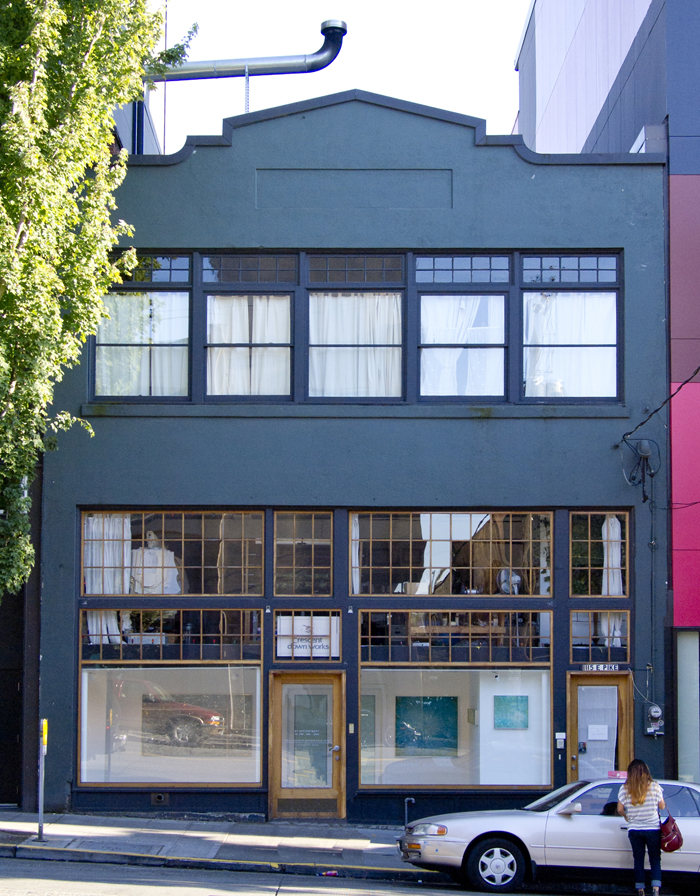
Capitol Hill's Pike-Pine corridor is our neighborhood's greatest urban asset and home to some of our best buildings. Odd Fellow's Hall, Agnes Lofts, and the Elysian Brewing building are just a few of the notables. In addition to these larger buildings, there is (at least) one real gem of a building, but easily missed due to its diminutive size and modest appearance. Don't let its size fool you, for this small edifice possesses a singular quality that makes it a giant amongst its larger peers -- an incredibly handsome and well-preserved wood storefront, remarkable both in its delicacy and in that it unpainted wood-- a bold approach given our 8 - 9 months of rather damp weather (paint is tougher than sealer). Fitting cozily between two recent and boldly modern buildings, 1115 E. Pike does not give an inch to its new block-mates. In fact, the two contemporaries framing it heighten the building’s light touch and historic qualities. Former tenants for the building include the Seattle Academy of Arts and Sciences, who used it as their music and activities building, after which it was the Capitol Hill LGBT center. Originally, it was an automotive parts building. It is owned by Anne Michelson, who built the condominiums next door (to the west) and also owns Crescent Down Works (http://www.crescentdownworks.com/), whose offices are inside, and whose fine down garments are made just around the corner at 1423 10th Avenue.


Unlike today's storefront window systems, which are almost exclusively made of aluminum (and of much greater heft), those on many of our heritage buildings are made from wood -- most likely Douglas Fir -- our region's most popular species for both rough carpentry (structural use) and fine wood working (furniture). And though I cannot be certain this is Doug-Fir, the storefront does combine both of its favored attributes, for here we have mullions (which are structural) as finely crafted as if they were ornamental woodworking (furniture). This level of handcrafted quality was typical before mass-produced steel and then aluminum storefronts came to the forefront.  Not encrusted with decades of paint or the often multitude of replacements parts, the storefront on 1115 is remarkably intact and in stunning shape, radiating a pleasing golden glow.

Examining the two photos above, one can see that this storefront was built on-site. Despite the (dare I say) machine-like precision of the smaller mullions, the large wood framing members (in blue) have an irregular pattern, indicative of the different trades involved in the storefront's erection (rough framing verses fine woodworking). The photo above shows how the window maker cheated the left transom mullions to be a bit smaller than those in the field to the right, in order to account for the relative imprecision of the larger structural framing. This does not detract from the facade's overall presentation; however, it may actually enhance it by nicely juxtaposing the precision of the window mullions and their clear finish, with that of the large framing members and their dark, ink-blue paint.

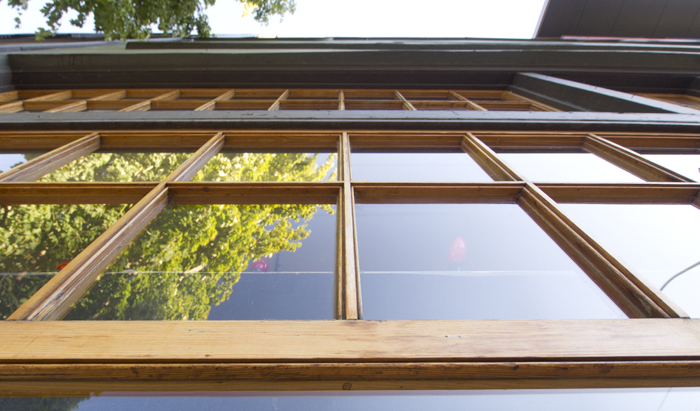
This photo reveals how the window itself is framed.  Even though constructed on a par with fine woodworking techniques, its structural role is an important driver in its final form. The part of the mullions furthest from the face of the pane of the glass is the primary structure; the slimmer profiled piece that is closer to the glass is what is holding the glass in place.  Though separate, each contributes to the overall integrity of the assembly. The differing sizes relay this hierarchical deployment, as well as adding nice shadow lines and detail to the whole. This is ultimately, the way it should be, isn't it? -- Beauty derived from a clear and recognizable hierarchy of parts to the whole, with no artificial ingredients needed. A discerning eye may also notice one real advantage our heritage storefronts have over those of today – no insulating glass! Like countless other, older Hill buildings, the glass in this assemble is ¼” thick single pane glass. Today’s high performance systems are an assemblage of two ¼” panes, separated by ½” of air, all contributing to a much more energy efficient product. Modern energy codes are a good and necessary thing, and well worth the efforts, but the aesthetic results are of secondary concern.

High-performance Buildings, Neighborhoods and the Seattle 2030 District

Sustainability and community are at the core of our practice. Achieving sustainability at the scale of the neighborhood is achieved over time and as the Portland Sustainability Institute reminds us and "...is the legacy of a generation, not the outcome of a single initiative or investment." At Schemata Workshop, we are engaging our community to build and steward long-term commitments to not only sustainability, but truly regenerative design by which we can actually improve the ecology of a place.

Toward this goal, we aspire to empower citizens to create and manage design and sustainability efforts in our community. Our work with the community on Design Recommendation Guidelines for the Capitol Hill Light Rail Station proved that this is possible and that residents are ready to take part in shaping our community. While boundaries are often blurred, the neighborhood is a scale at which citizens are empowered and impacts (both positive & negative) are readily visible. Our interest in positive change in our community continues to be the core reason for our involvement with the Capitol Hill (CH) community through the 12th Avenue Initiative, CH Chamber, CH Community Council, 12th Avenue Transportation Safety Committee, Seattle Central Community College Advisory Board, among others.

People matter most. We all will generally admit that, but it’s been strengthened over the past decade through our work with cohousing communities, our experience on the board of the National Cohousing Association, our work on a variety of community centers, our participation at Housing Washington, and our work in support of local housing developers. A sense of community is critical to achieving social cohesion and connections to people committed to sustainability goals.

Schemata Workshop, and I personally, have signed on as a founding member of the Seattle 2030 District as my commitment to helping the City, and building owners in particular, achieve carbon neutrality by 2030. While Capitol Hill was identified as Phase 3 of the district expansion, the opportunities here are great, the time is right and I continue to advocate for including Capitol Hill as the group moves forward with Phase 2.

www.2030district.org/seattle

Here's a link to a short video describing the efforts of a number of individuals and organizations (Don't blink, but Grace & I show up just before the 3:00 minute mark):

Keep an eye on our website and blog for more on the topic as we begin to articulate what we're up to on issues related to sustainability.

Mike

Capitol Hill’s Other Bauhaus(es)

As well as being the name of Capitol Hill’s premier coffee house and a 1980s Goth band, Bauhaus was the name of the modern movement in architecture’s most famous design school. Perhaps the most famous, ever. The only competition for such a superlative may be for the École des Beaux-Arts, the Parisian school that is most (in)famous for its pedagogy of classical architecture, and whose pre-immanence was in fact eclipsed once the Bauhaus came into being in the early 20th Century. The Bauhaus was justly famous as a school for painting, sculptor, dance, graphic design, but it was in the field of architecture that its legacy was — and is — strongest. Modernist icons such as Mies and Gropius both lead and taught at the institution, and both followed with highly successful and influential professional careers after the Bauhaus was disbanded by the Nazis prior to World War II. The design pedagogy taught resulted in some of the 20th Century’s best buildings, including that of the school itself, designed by Gropius and pictured below.  

[caption id="attachment_2113" align="aligncenter" width="550" caption="The Bauhaus (Source: Wikipedia)"]The Bauhaus (Source: Wikipedia)[/caption]
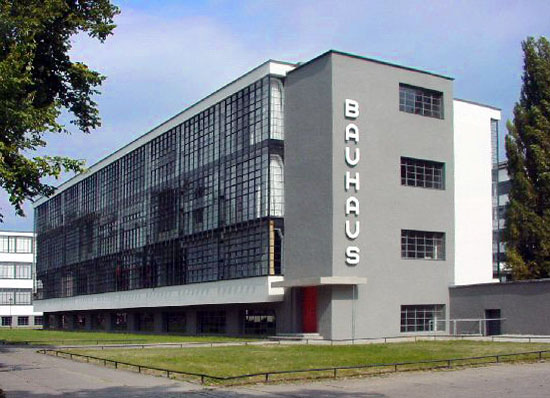
 

It would be hard to underestimate the influence the Bauhaus had on design schools in the United States. After its closing many instructors came here to continue their teaching careers and professional practice. Gropius landed and Harvard, while Mies ended up at the Illinois Institute of Technology in Chicago. Even tiny Black Mountain College (no longer extant) in the mountains of North Carolina landed some Bauhaus alums. The design approach taught was, in its time, at the cutting edge. So cutting edge, in fact, that it was initially a design approach typically found only in larger cities or for larger clients or more prestigious buildings. That was of course bound to change with time, but smaller markets (as Seattle at the time) were longer to embrace the Bauhaus aesthetic, especially for smaller, developer driven buildings. Education also had an influence on the Bauhaus’s dissemination into the U.S., as the Beaux-Arts tradition was what was taught at the vast majority of our universities well into the 1930s, and most likely at the U of Washington as well.


[caption id="attachment_2114" align="aligncenter" width="720" caption="303 Harvard Avenue E Corner View"]303 Harvard Avenue E Corner View[/caption]
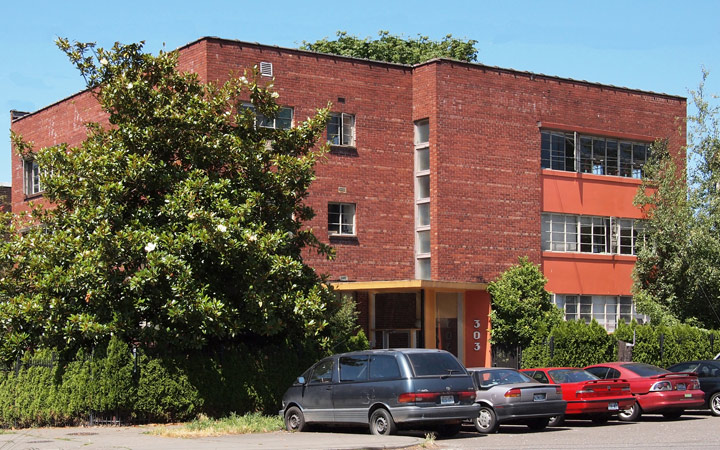
 

And though perhaps a bit slower to arrive at the modernists dance, Seattle’s Capitol Hill is fortunate to have several Bauhaus/International Style (similar time period and aesthetic) influenced apartments of various sizes, including the mid-sized beauty pictured above, built in 1949. Thirty years elapsed between the construction of the Bauhaus and 303 Harvard Ave E, perhaps enough time for a direct connection to be tenuous; however, the lineage is evident. Cubic massing, concentrated and expansive use of glass (with an emphasis on horizontals juxtaposed by verticals), and something missing form today’s Bauhaus prodigy: the crisp delineation of the depth between the buildings mass (in this case brick) verses its openings.


[caption id="attachment_2115" align="aligncenter" width="720" caption="303 Harvard East Elevation"]303 Harvard East Elevation[/caption]
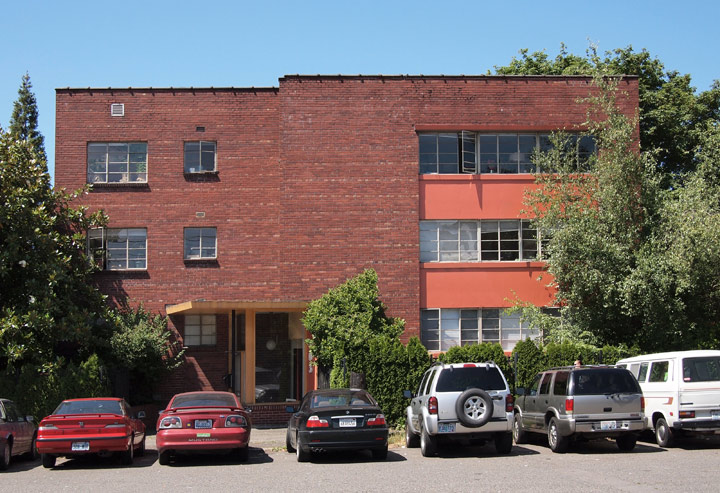
 

Similar to the recently profiled Boylston Court, 303 has the beloved steel window, whose effectiveness as a design element is enhanced by it being framed by the more massive feel of the brick, as well as the little horizontal projections at the window heads and sills. No corner windows here, alas, but the modernist,s next favorite trick — that of the continuous ribbon window — and here deftly used in combination with concrete spandrels on the building’s most significant facade. Nice!


[caption id="attachment_2116" align="aligncenter" width="720" caption="303 Harvard Entrance"]303 Harvard Entrance[/caption]
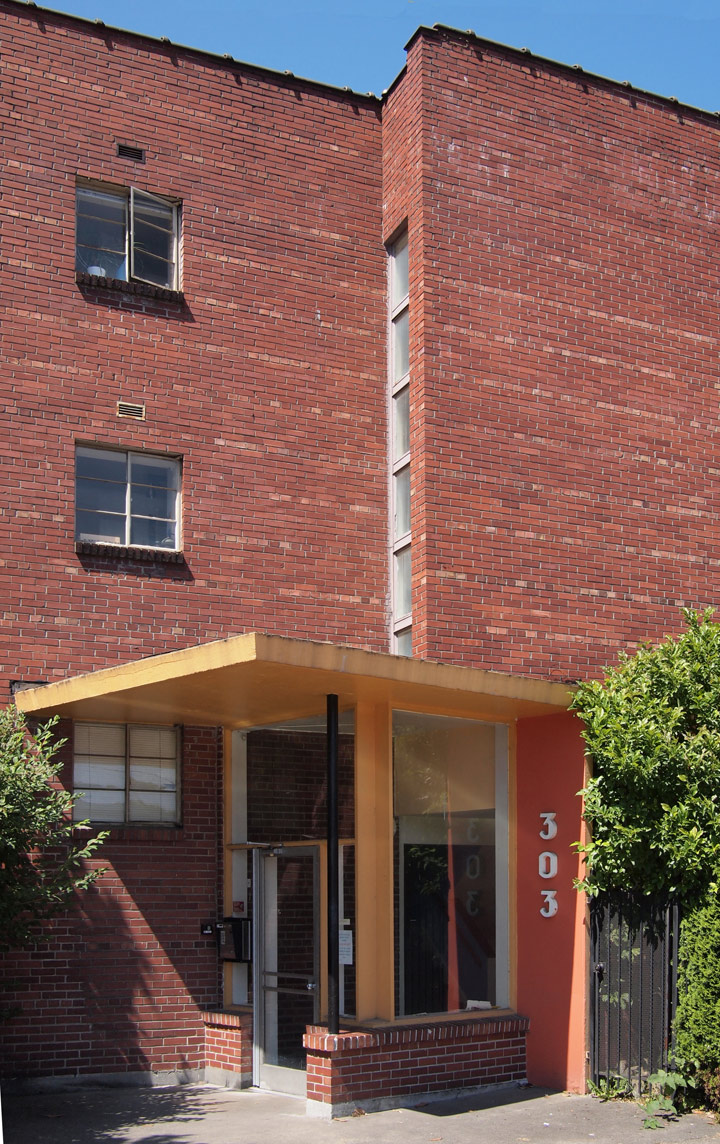
 

Even the addressing numbers have the same proto-super graphic and vertical arrangement as the Bauhaus, this time with an art-deco font. The concrete entry canopy continues the thin lines above the windows in the body of the building, and is at a bit skewed from the mass of the rest of the building. No steel frames here, the window glass is framed directly into the concrete structure, lending it further distinction from the rest of the building. Especially nice is the re-entrant corner and the lone steel post. It would be nice to have a look at the interiors of the units, hopeful that they still may have some great space-age appliances and fixtures.

There are at least several other buildings of this ilk on the Hill, three of which I documented in this pamphlet: Capitol Hill Building Analysis . Each one unique, and each one worthy of providing precedent to future design projects on the Hill — all to better balance the prevalent and suffocating post-modern pastiche that is all too often referenced in the majority of our current development.