Design Thoughts

Modular Construction - A Tipping Point for the Affordable Housing Industry?

For more than a decade I’ve been touting the benefits of modular construction to the affordable housing industry.  In the early years, I was trying to convince bankers that modular construction was real property – they confused modular with manufactured housing (aka mobile homes or double wides).  Then it was talking with General Contractors about how their subs would bid out the site work, and whether they would charge a premium due to decreased scope or uncertainty about scope.  And the latter few years was spent encouraging an Owner to be the pioneer – to be the first to build a multifamily affordable housing project using modules. 

tortise and the hare

tortise and the hare

At times I felt like I was the proverbial tortoise watching the hares run by with built prototypes and talk of market rate multifamily projects. Michelle Kauffman, with her Breeze House and Glide House, opened up the single family market and suddenly prefab was perceived as cool and sustainable by the likes of the Sunset and Dwell magazine readership. When Michelle was a keynote speaker at the Housing Washington Conference [1] a few years back, I thought “wow, it’s about to tip!” But it didn’t.

Until now.

On July 23, we opened bids for Schemata’s first modular construction project. The pioneering client is the Renton Housing Authority. The project is an 18-unit 2-story multifamily project – predominantly townhomes but with four stacked flats, making the scope a perfect test case.
2013_0315 Modular Graphic-1.jpg

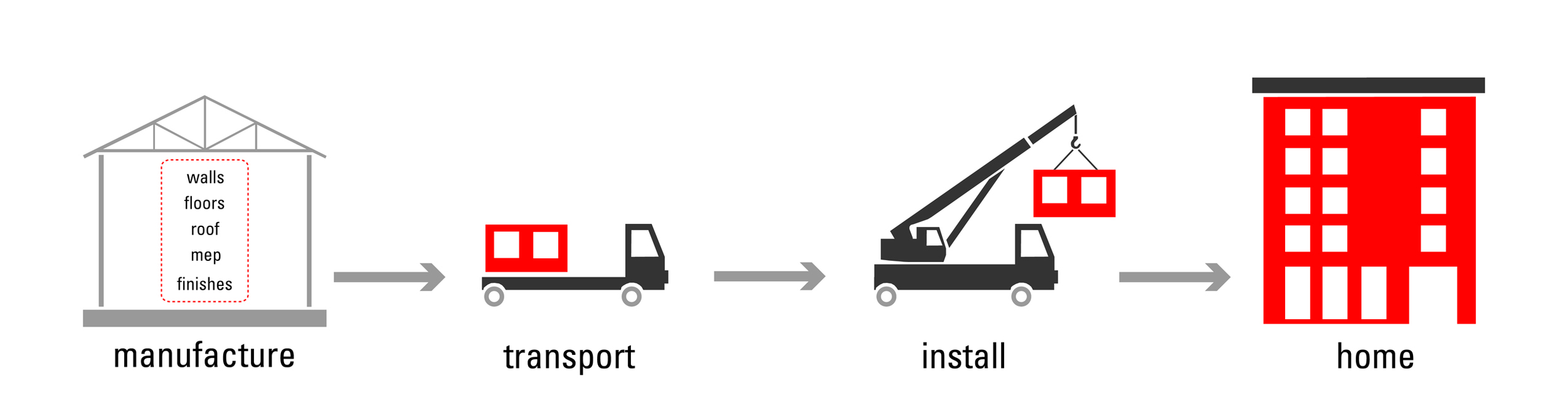
Modular construction means that residential units arrive on site 90% complete with interior finishes, flooring, plumbing and lighting fixtures, electrical wiring, plumbing lines, windows and even exterior cladding if you choose. The modules are trucked to the site and lifted onto a site built foundation by a mobile crane.  

OneBuild Modular Setting

OneBuild Modular Setting

The state and county funders thought the project was very innovative and awarded the project funding on the first round, which was quite an accomplishment in such a competitive environment.  And while construction for sitework will commence immediately, the L&I approval process [2] for the modules is just starting with the selected manufacturer which means that modules cannot begin production for at least 2-3 months. 


The design of the project started off with a strong understanding of the shipping constraints [3].  While modular construction can accommodate wide open and double height spaces, the greatest economy can be achieved when modules are essentially intact, self-contained boxes.  Given the tight construction budget, we elected to be conservative with our first project and go the latter route, expressing the modularity of the construction type in both the unit planning and exterior expression.  Intent on a design that would allow the new homes to fit in with the neighboring modest and traditional housing, we looked at the gable form of the archetypal house.  However, the width of the units were 14’ wide and gables over each unit which would have created a busy roofline.  Instead, the gable was split over 2 units and the two halves slid past each other to provide modulation along the street.

KAT concept diagram

KAT concept diagram

As townhomes, the stacking of units creates a fairly straightforward connection (or marriage) of modules with similarly straightforward wall and floor/ceiling assemblies; however, transition between the floors (namely at the stairs) had to be increased due to the redundant structure in the floor/ceiling assembly which resulted in lower ceiling heights than typically desired. The flats were not limited in ceiling height and the floor/ceiling assembly still posed some challenges relative to the sound transmission and impact noise.  In addition, the marriage line required some attention in the detailing since there were openings between modules.  This was not an issue at all with the Townhomes since the connection between modules was only vertical. However, the marriage line at the stair between upper and lower modules will be carefully reviewed during the “button up” phase [4].

Many owners assume incorrectly that modular inherently means a savings in construction cost.  As one modular vendor aptly described, modular construction uses the same lumber and drywall that a site –built project requires. The deliveries that occur to a job site still take place, just at a factory leading to basic materials costs which are more or less the same as traditional site-built construction.  It is true that the working conditions in a factory are much more efficient and result in lower material spoilage and waste, yet any cost savings in labor are offset by the fact that the modules are over-engineered to withstand the structural impacts of transport and lifting by crane. In fact, there is almost double the wood framing in a modular construction project than typical site-built project, making the modules very structurally robust. So it is not feasible that the costs would be less. Now if there were some economies of scale (not as significant on an 18-unit project), there is the possibility for the overall cost per square foot of the modules to come down significantly.  

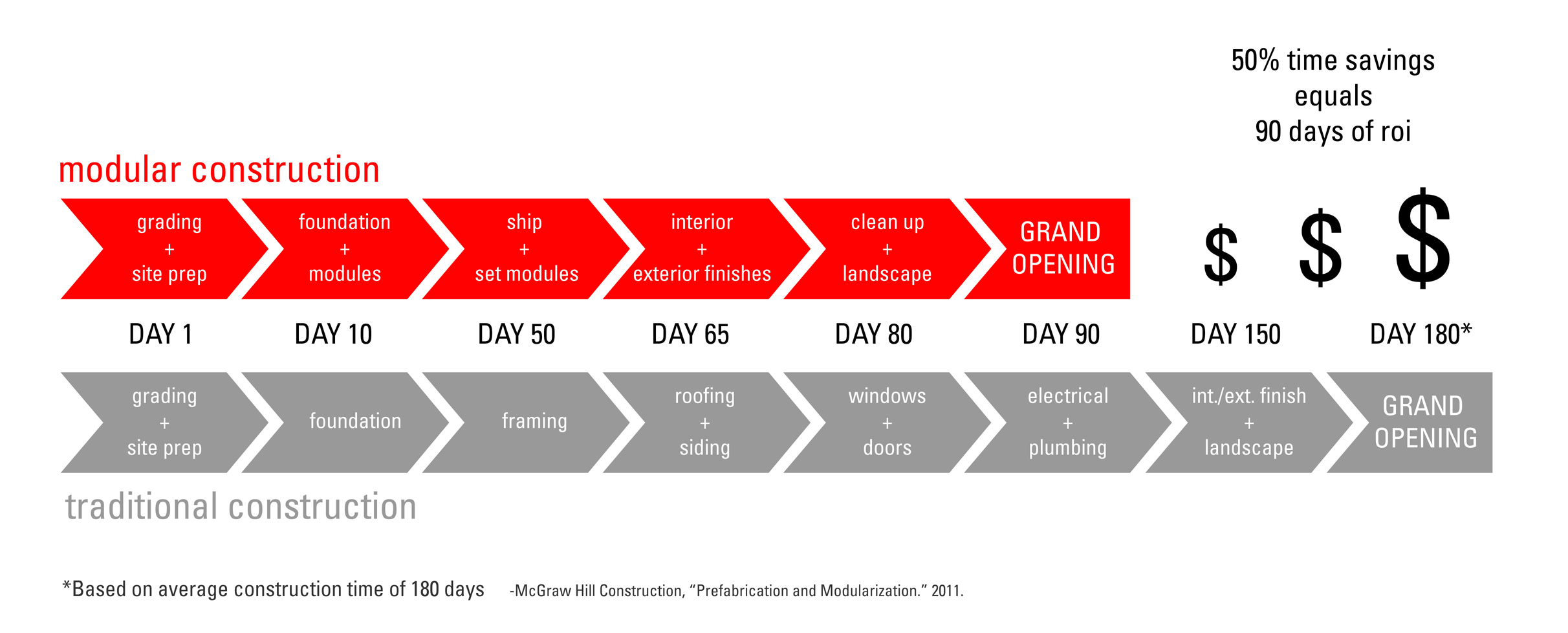
Where the potential cost savings lie are in the construction interest carry. For any developer of affordable housing, the ability to reduce the amount of interest paid means that there are more funds available for higher quality, durable finishes or a play structure for the children who will live in the project, or the staff time to provide supportive services for the residents.
2013_0315 Modular Graphic-2.jpg

Shorter construction time also means that the units are available for residents to move in sooner meaning the owner can start collecting rents and servicing the debt faster.  This is of benefit to any multifamily developer, non-profit or market rate.  However, for the affordable housing developers, the ability to provide more units in a shorter timeline means that they have the ability to serve more hard-working families, seniors, and veterans in need of housing.

We look forward to seeing whether Schemata’s first modular construction project will be the tipping point for the affordable housing industry and for Schemata’s multifamily portfolio.

  1. Housing Washington is the state’s affordable housing conference.  It is held annually and between 700-800 people attend - primarily non-profit housing developers, public housing authorities, social service providers, lenders, attorneys, architects and contractors working in the affordable housing industry.  As one of the largest of its kind, the conference draws 10% of the attendees from other parts of the country.
  2. Washington State Labor & Industries will review the modular plans for adherence to building and energy codes.  L&I will issue a Gold Insignia for each module, which will dramatically decrease the permitting costs but will increase the costs for special inspections.
  3. Trucking dimensions are roughly 14’ wide, 65’ long and 14’ tall.  Modules can be wider or longer, but pilot cars will be required, adding to the already high transportation costs. 
  4.  Button up refers to the patching of the marriage line between modules – both vertically in the townhouse stair and horizontally between rooms of the flats.
The Kingshire: A Mid-Century Sleeper on Harrison

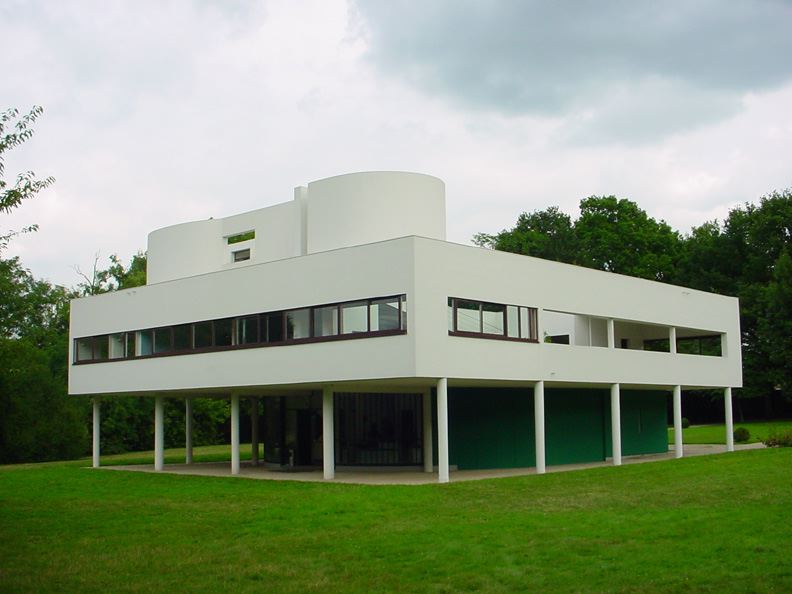
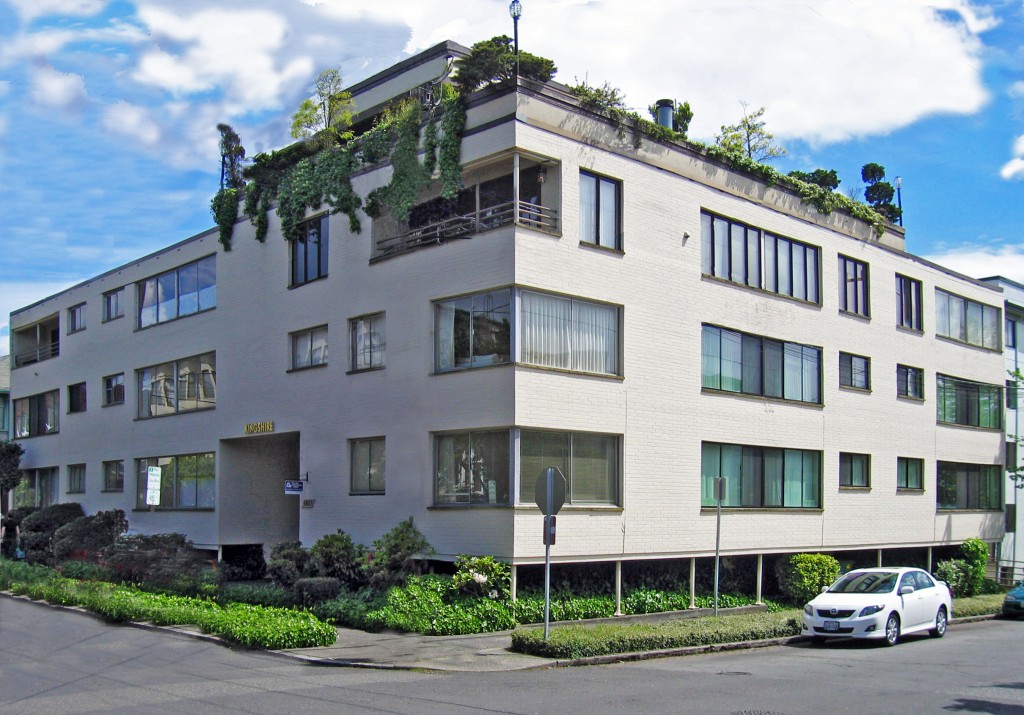
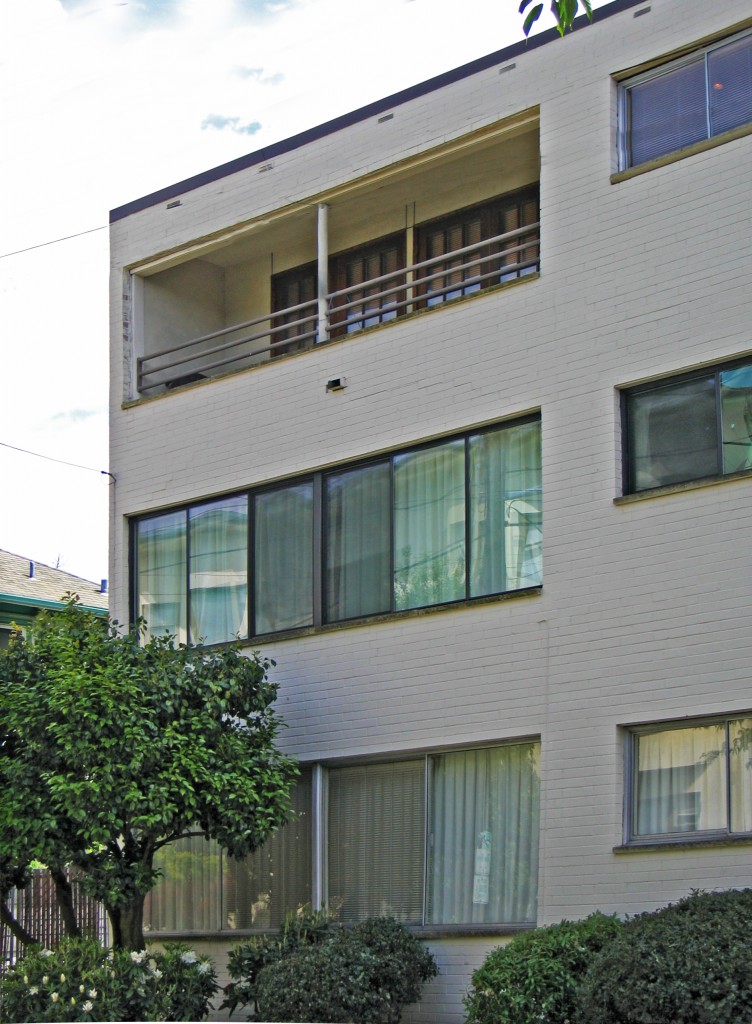
Every time I walk by the Kingshire, at the intersection of 14th Avenue  East and  East Harrison, I flatter myself and wonder if I am the only one who appreciates its dignified and restrained design. After all, it is only a white box with a relatively flat facade and an entry that hardly gives one pause. Despite these attributes (or because of them), the Kingshire is a little beauty with a subtle complexity to it and is a great example of many of the finer points of modernism. Among these is the nifty way the building touches down on its site, with its brick façade wall held up by diminutive pipe columns supporting a steel lintel. Both the scale of the columns and the void they create are certainly a reference to the design prerogatives of modern masters such as the Swiss architect Le Corbusier, whose pilotis (columns that allow for the raising of a building in order to let the landscape pass underneath) became a modernist icon.

The Villa Savoye (1929)

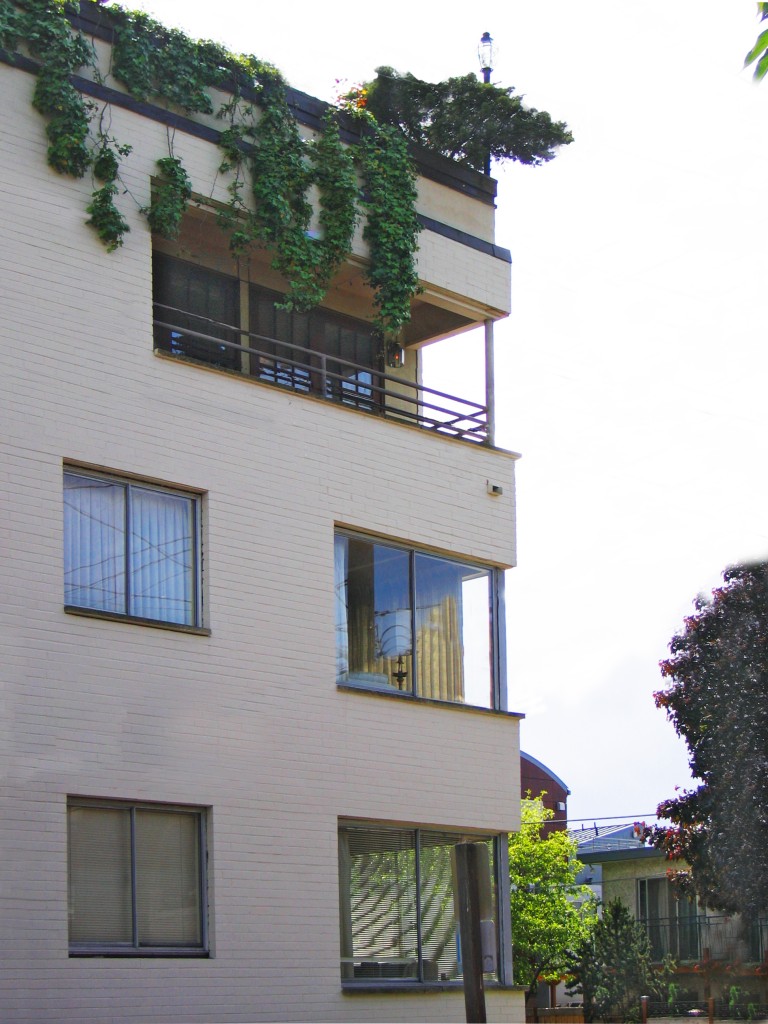
On the Kingshire, the height afforded by the columns is of a decidedly smaller scale than that of the Villa Savoye, and most likely is a recognition of this building’s urban setting and its need to create a strong street edge. The roof too makes a nod toward Le Corbusier, with its lushly planted roof garden and well-tended foliage gracefully hanging over the parapet. Between the pilotis and roof garden (and setting up the base, middle, and top architects do so love) is the middle facade where the shifting of widow openings and mullion patterns from floor-to-floor, as well as a pair of subtractive windows (perhaps another reference to the Villa Savoye?), reveal the Kingshire to have a host of latent surprises.  Such variety in articulation is a fine example of how even a slight alteration in an otherwise regularized design vocabulary is effective at achieving variety and nuance. Note how the third floor corner windows have either more tightly spaced mullions, a flipped orientation compared to their lower floor brethren, or are even subtractive.  Best of all, these design distinctions a grounded within the building’s simple vocabulary.

Painted white to achieve a certain level of modernist abstraction, the building convincingly uses brick as its skin.  Modernism generally eschewed brick as being too traditional, instead preferring white stucco. None-the-less, the brick here provides a reliably crisp edge around the openings; perhaps the most effective single detail one can lend a building to give it a sense of scale. Built in 1957, the Kingshire is one of the Hill’s most handsome modernist buildings. Sadly for us, there are not many examples of its type, which is a shame as its design has an economy and suitability that would make new derivations of its design precedence most welcome even 55 years later.

Conserving Authenticity in Capitol Hill's Buildings and Streetscapes

The ongoing debate on the Hill as to the value of conserving our so-called ‘character structures’ (buildings over 75 years-old) is heating up. It is fueled in part by recent development proposals that choose to incorporate (or not) such buildings into their project. Much of this debate — and the value placed by developers on preserving any particular character structure — centers on the merits of a building’s architecture and whether or not the building in question is great, or even good. All too often, however, such a focused valuation of building-as-object ignores the real value embodied in everyday buildings, and dismisses the contributions these buildings make to the urban fabric. Those who focus on building-as-object overlook how neighborhood character is defined as much by the ordinary buildings one encounters as by the extraordinary ones, especially when those of ordinary qualities comprise an assembly that weaves a complete, cohesive, and convivial urban fabric. While there are many impressive vintage structures on the Hill that deserve preservation outright — regardless of the surrounding urban fabric, such as the one at Pine and 11th pictured below, there are certainly many more buildings that actually contribute more to the character of Capitol Hill’s enviable streetscape, even if paling in comparison to our most beloved buildings as singular architectural objects,  While a building’s particular architectural pedigree may be important, it is arguably more important to value the contribution a good collection of ordinary buildings makes in achieving neighborhood character.

11th and Pine, Capitol Hill

Pictured below are some traditional streetscapes that are an absolutely first rate, despite of (or perhaps because of) their being defined by average buildings. In these European examples, the adjacent streets inevitably lead to piazzas surrounded by architecturally magnificent secular and religious buildings that are the standard fare in that part of the world. Yet, it is a neighborhood full of streets just like those pictured below, defined by their average and ordinary buildings, that fosters the qualities which make these cities great. And it is ultimately  this kind of street fabric that creates the quality spaces residents and visitors cherish just as much, and perhaps to a greater extent than, the grand buildings so often featured on the postcards we send back home.

Mantua, Italy

Bruges, Belgium

Back on Capitol Hill, let us suppose we have the same relative ratio of average buildings to grand buildings leading to a similar high quality built environment. With an understanding that the average does as much as the grand in creating our neighborhood character, there is no better representative assembly of such buildings on the Hill than those along 11th Avenue between Pike and Pine, pictured below. No individual building is particularly grand or distinguished, but taken together they form one of our great streetscapes. By paying attention to the cumulative effect created by such a collection of buildings, one is able see their value in establishing the kind of desirable character that many of us on the Hill cherish. Criticalto our current debate, this character is fully compatible with new development. Conserving our character structures while simultaneously building new structures is the kind of balanced development approach that will continue to inject fresh ideas into our built realm, while paying due deference to the urban qualities that attracted us here in the first place. To foster the positive outcome of a balanced development approach it is incumbent on members of the Capitol Hill community to effectively communicate to developers that they must take time to understand the value we place on a successful blending of both the old and the new structures.

11th Avenue, Capitol Hill

One relatively close by neighborhood that has achieved a very successful old-new balance on a neighborhood scale is Portland’s Pearl District. It took me some time to realize it, but it is the Pearl’s southern portion (where the character structures are, the northern portion was undeveloped rail yards) that is the most successful. The inclusion of both old and new is especially successful when the two are juxtaposed, as seen below. In this case, neither old nor new structures are exemplary as individual buildings, but taken together the streetscape they form achieves a balanced scale and creates a rich variety of experiences.

NW Glisan Street, Portland, OR

NW 11th Avenue, Portland, OR

Pursuing such a balanced development approach on the Hill presents one with several options. First, and as promised by the developer of the Bauhaus building site, there is a preservation strategy that includes the character structure’s original exterior design and the retention of its interior environment. New development would occur above and be visually distinct in appearance from the retained character structure. In the particular case of the Bauhaus development the approach is certainly laudable, supportable, and easy to imagine as both the exterior and interior of the Bauhaus and adjacent Pineview Apartments are clearly something special. In the case of the Bauhaus/Pineview, we have a building that is fairly distressed requiring considerable resources and a financial commitment from the developer. Beyond leveraging the ambiance (and good will) of our neighborhood, one major incentive in favor of preservation of the Bauhaus is, of course, the extra floor the developer is awarded as an incentive for its preservation. This incentive is the means that the developer needs to offset the added costs of preserving the buildings instead of tearing them down, and was conceived and shepherded by members of the community, and adopted by the City in 2009.

The Bauhaus Building, Pine and Melrose

Bauhaus Building Interior

In addition to the straight forward preservation approach of the Bauhaus, one could pursue to adaptively re-use a building by restoring it to take on new uses its original developers may never have considered. This option can be attractive if the building in question is, say, a diamond in the rough and not such an obvious preservation candidate as is the Bauhaus. One thing making this approach attractive on Capitol Hill is that we have many of the old Auto Row buildings, buildings originally designed to support automotive uses. Automobiles, being rather large and heavy, required extra-stout structures and open floor plans. The upside to this is that a robust structure and open plan provide the most flexible floor plan of all, one that is well suited to provide for the diverse demands for tenant space on Capitol Hill that include retail, office, and restaurant. In our debate on the value of maintaining the granular streetscapes through preservation of the average and every day, goals for preservation certainly should include such Auto Row buildings as the Davis-Hoffman, pictured below. Davis-Hoffman is is a perfect candidate for conservation efforts, the extent of which are being discussed by members of the Capitol Hill community and the property's  developer, and whose latest design fully integrates the Davis Hoffman and the adjacent Madison Park Greetings buildings into the project.

Davis Hoffman, Original Condition (Puget Sound Archives)

Davis Hoffman, Current Condition

Removing the layers of previous renovations would reveal that in its former life the Davis Hoffman was a much more handsome building than it is today, and, more importantly, has those average qualities that contribute to extraordinary streetscapes. Even today it has porosity — courtesy of a substantial collection of large windows — that distinguishes it from contemporary developments. Paired with the two adjacent Madison Park Greetings buildings around the corner (and part of the same proposed development), the Davis Hoffman creates the type of continuous street fabric that has made neighborhoods such as the Pearl District a great success, and holds great promise for ours. Fortunately, on Capitol Hill one needs not imagine the potential outcome of such conservation efforts, for we have many fine examples of adaptive re-use projects. Thanks to such forward thinking developers as Hunter’s Capital, Dunn and Hobbs, and Madrona Real Estate Services — to name but a few — we have not only the architectural proof of the viability of such a strategy (while often times starting with buildings in much greater distress than is Davis Hoffman), but of its financial merits as well. And this group of local developers is willing to share their experiences with others seeking to achieve similar results by in their own development projects.

Elliott Bay Book Company, Prior to Renovation (Image Michael Oaksmith)

Elliott Bay Book Company, Post Renovation

When Elliott Bay Book Company relocated from Pioneer Square, it was a significant victory for Capitol Hill. It was no easy achievement as its previous location in the Pioneer Square Historic District defined the character of the bookstore as much as the thoughtfully chosen volumes that graced its shelves. Such character was important to the book store owner, and was a prime driver during his search for a new space. Thanks to the adaptive restoration of the flexible Auto Row typology from automotive service to bookstore, we have a fine retail space whose character and authenticity is preserved. In addition to the code-required seismic upgrade, restoration strategies included restoring the wood trusses and skylights, which had been roofed over. On the facade, a historically accurate new window system was installed. This was done in addition to the more typical new bathrooms, modern telecommunications, lighting, and heating/cooling system upgrades. A fairly involved process, but with results that have created one of the best retail environments in all of Seattle. Yet the developer, Hunters Capital, could have easily demolished the building, and started afresh with a 6 story edifice. Besides a passion for old buildings, Hunter’s has found that such spaces create desirable and profitable retail spaces, which have a unique ability to attract discerning local retailers such as Elliott Bay Books.

Elliott Bay Book Company, Interior Prior to Renovation (Image Michael Oaksmith)

Elliott Bay Book Company, Post Renovation

In addition to the above success story, there is another project that perhaps required even greater vision and fortitude: taking the building pictured below and realizing what has become a model for small, local retail, and adaptive re-use projects — the nationally acclaimed Melrose Market. Quite frankly, it is hard to imagine anyone seeing the value in its pre-restoration condition. But someone did, and thanks to developers Dunn and Hobbes and Eagle Rock Ventures, we have a project that has literally re-defined the western edge of Pike Pine. What was formerly a forgettable street has been transformed into what many  see as becoming one of Capitol Hill’s fines.  It provides the foundation for a great streetscape being embraced by current and future development projects such as the above mentioned Bauhaus project whose conservation efforts were inspired by those of Melrose Market.

Melrose Market, Prior to Renovation (Image Liz Dunn)

Melrose Market, Post Renovation

Melrose Market Interior, Post Renovation

Melrose Market is another good reminder (similar to Elliott Bay) that the conservation of the interior environment elicits as much consideration as the outside.  Another former Auto Row building, Melrose Market has long spanning trusses that prove to be well adapted to re-purposing. At Elliot Bay, which has a similar structure, the space provided is for one large retailer whereas at Melrose Market space provided is for almost a dozen, revealing the beauty and utility of the auto-row typology. In both cases the success of the project involved more than removing layers of paint, repairing rot, and bringing the building up to current standards of health and safety. Thoughtful tenanting of the spaces was essential, and to my mind, the successful results were almost a forgone conclusion. Larger national chains, with their standards of vending and for spaces they feel optimize the separation of shoppers from their money may not look twice at Melrose as it doesn’t fit within their conceptions of a successful retail environment. Yet, Elliott Bay Book Company and Melrose Market are of a culture that appreciates the unique qualities possessed by character structures, making the conservation of such spaces as appealing in attracting the types of businesses we desire on the Hill as are the spaces themselves. In a broader context, conserving our heritage buildings is one of the best a means we have in providing the type of spaces that locally-bases businesses crave, and many of us want to support.

Agnes Loft, Terrace Between Old and New Structures

Both old and new buildings are needed to create a cohesive urban fabric, and it is starting to emerge on small patches of Capitol Hill. New, modern buildings, with their clean lines and transparency are to be expected — and are most welcome — as they fill in parking lots, gas stations, and vacant lots.  However, we must not neglect those portions of our neighborhood where frontages of character buildings exist and ask developers to thoughtfully incorporate them into new developments while there still is an opportunity to do so. There should be little debate that such a conservation strategy is critical not only to maintaining the neighborhood identity many of us cherish, but to providing the kind of spaces others of like mind are looking for when searching for a new place to call home.


Jasper Park Lodge's Rustic Modernism

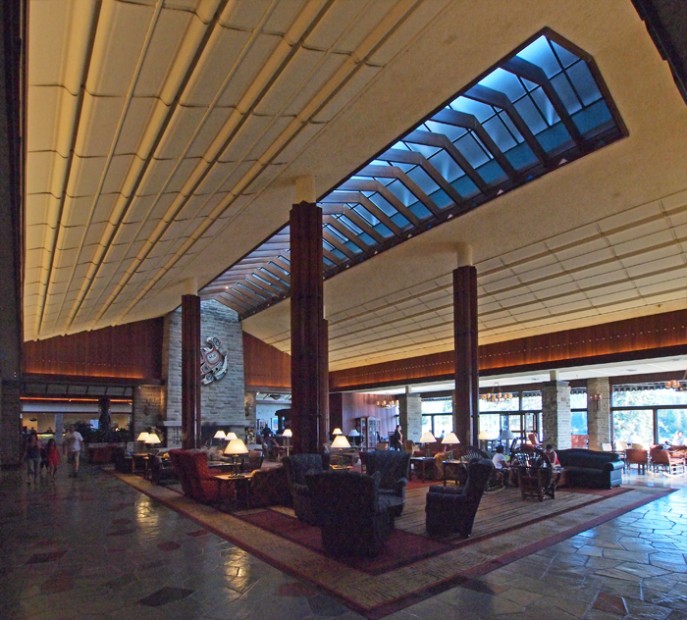
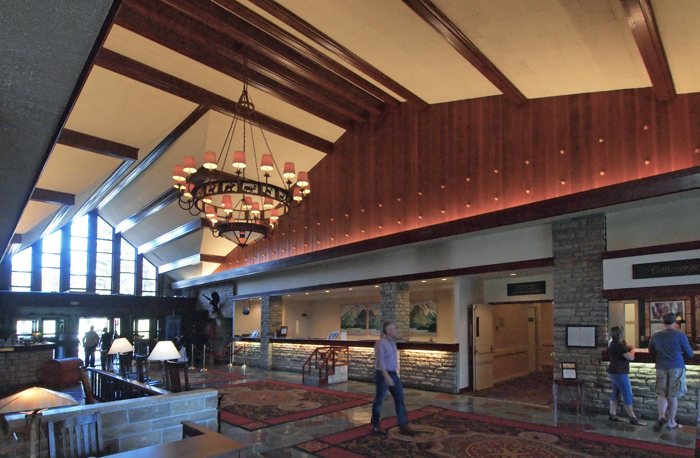
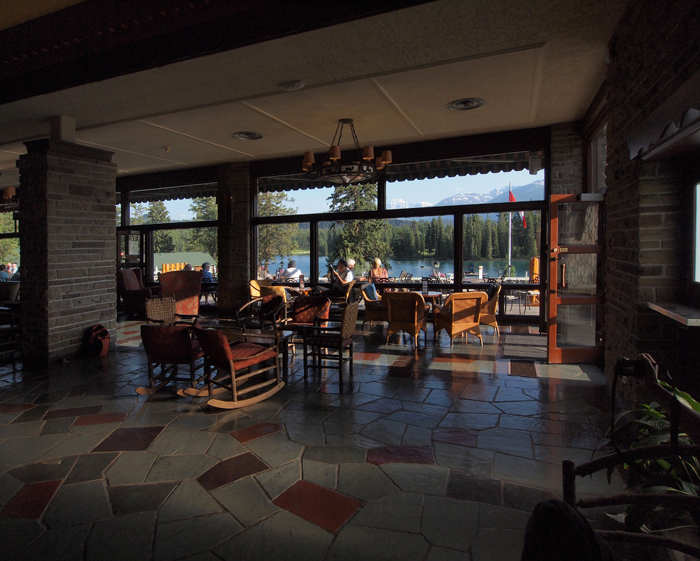
Much of so-called hospitality architecture leans too heavily on nostalgic imagery for my tastes. Especially so are those buildings that are in or adjacent to national parks, which try to harken back to pioneer days. True, there are many great, truly rustic lodges in the West -- Timberline, Crater Lake, Yosemite, Glacier National Park -- to name but a few. But those lodges, if not built during the time period we typically associate with pioneering days  (the 19th Century), were at least pioneering in the location within which they were built, which was more often than not far removed from established roads, towns, and other support infrastructure.

This lack of support meant that -- much as the true homesteading pioneers -- lodge builders relied on hand tools and manual labor, local craft traditions, and other limitations not posed today. Lodges built in the later half of the 20th Century and to this day were (and are) not faced by such hardships, yet many (most?) continue to evoke forms that have nothing to do with the time or traditions within which they were built. This is not the case at Jasper Park Lodge,  where the architect (whose name I could not ascertain during my stay there) artfully blended an historic 'lodginess' with mid-century modern flair.

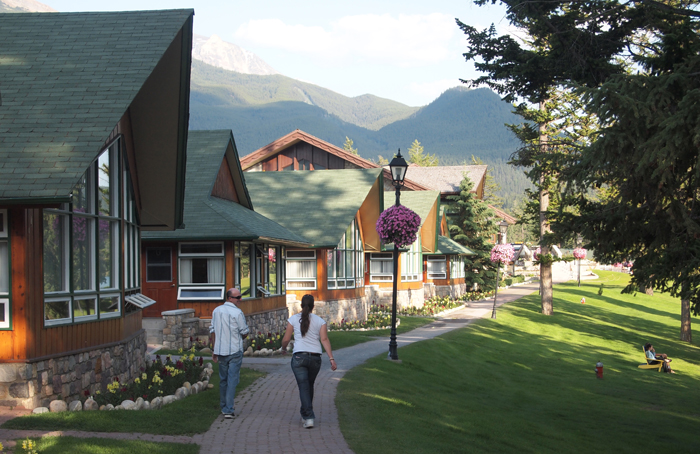
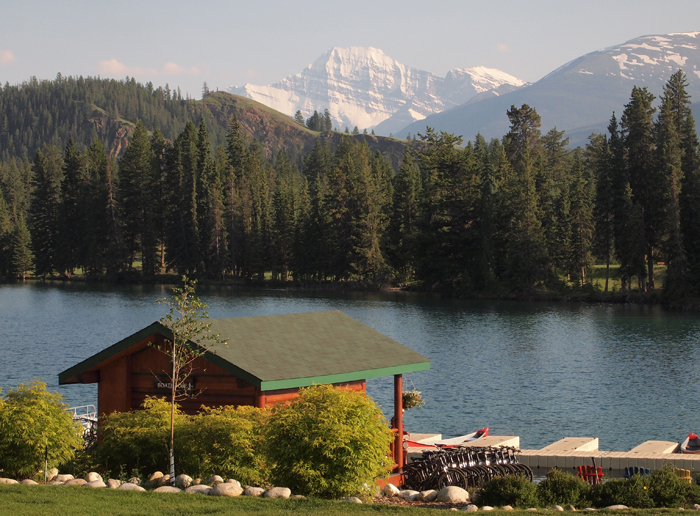
Most likely built in the 1950's, this incredibly well conceived building combines the seemingly disparate goals of handcraft and the then jet-age aesthetic into a wholly original design. I can only image the struggles the architect endured balancing the expectations of rough-hewn and hand-crafted, with where his or her heart really was -- firmly modern. Fortunately for us, they were able to not only represent both, but do so in a highly original and satisfying way. And is a most spectacular setting.